Vaccination

Help Vaccinate a Child in Need

Help Vaccinate a Child in Need

From Arrival to Survival

No child should die from a preventable cause.

One of the greatest advances in global health and development, vaccines have been used for over two centuries to drastically reduce the impact and damage done by diseases like polio, measles, and smallpox.

Vaccines offer invaluable life-saving protection to children and babies by sparking their immune response to fight off specific deadly diseases.

These childhood vaccines save more than five lives every minute, preventing up to three million deaths per year, allowing the world’s children to grow up happy and healthy.
Childhood Vaccinations

UNICEF is proud to be the largest distributor of vaccines world-wide. In the last 20 years, UNICEF and our vaccine distribution efforts have reached more than 760 million children with life-saving vaccines, an effort which has prevented more than 13 million deaths.

Through the Global Polio Eradication Initiative, in which UNICEF has partnered with WHO, Rotary International, CDC, Gavi, and the Bill & Melinda Gates Foundation, the world has seen the number of children affected by polio reduced by 99 percent – cutting the number of polio-endemic countries from 125 to just 2.

Unfortunately, due to the ongoing COVID-19 pandemic and the Coronavirus vaccine rollout, routine vaccination programs have experienced widespread disruption to their distribution efforts. Millions of children are now at risk of serious illness and death from easily prevented diseases such as Polio and Measles.

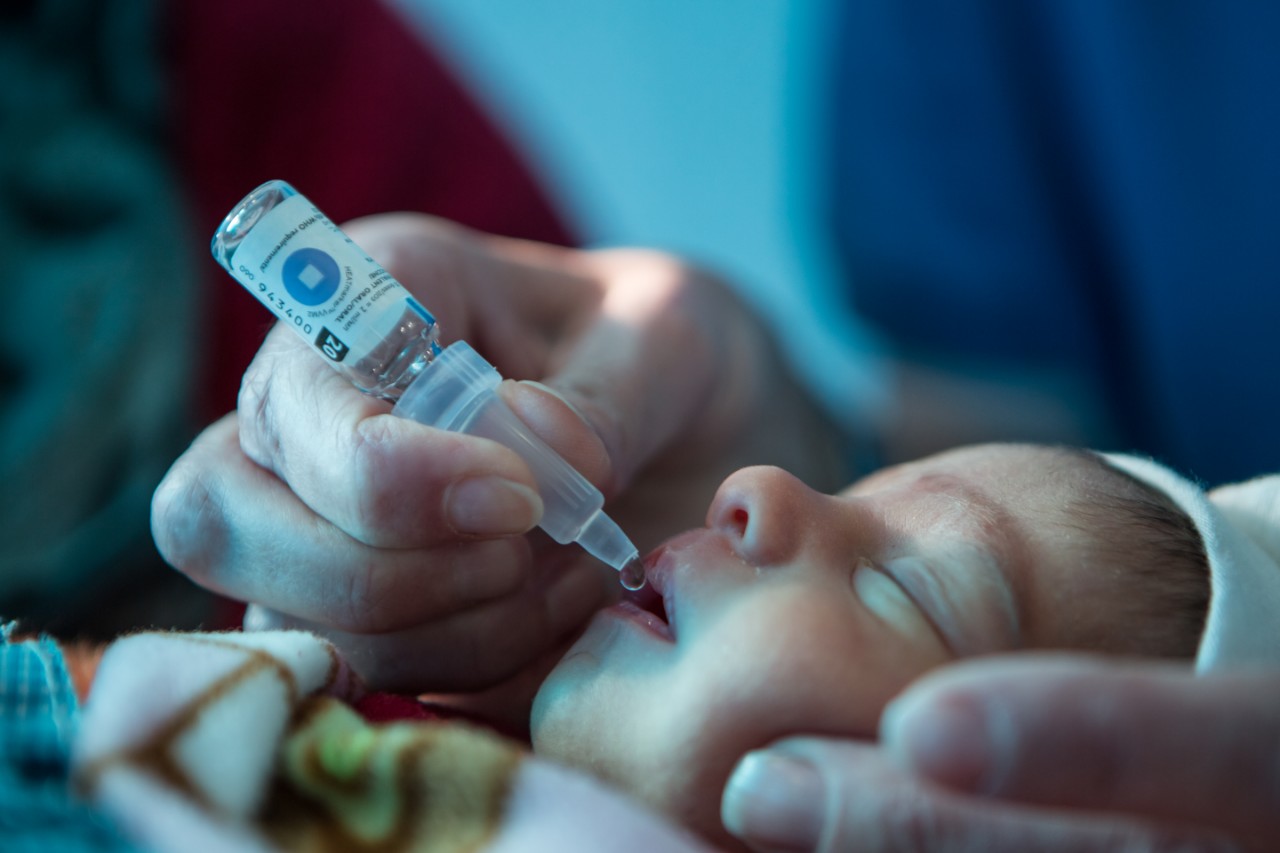
baby being vaccinated

A baby is being vaccinated in the Obassin region of Burkina Faso. © UNICEF/UN0569315/Dejongh

Working to End Polio

What is Polio? Polio is a highly infection viral disease that was once the leading cause of paralysis among children worldwide. Polio is spread when people come into contact with droplets launched into the air when infected people sneeze or cough. It can also spread via contact with the feces of infected individuals.

In most people, polio presents no symptoms after infection. For some, polio symptoms present as a flu-like illness lasting roughly one week. In a small number of cases, the polio virus attacks the nerves in the spine and the base of the brain, potentially causing paralysis that develops over hours or days.

This paralysis is not often permanent, but it can create persistent problems with breathing muscles which can be life threatening. There is no cure for polio, so without routine vaccination programs, children and infants around the globe are left vulnerable due to this entirely preventable illness.

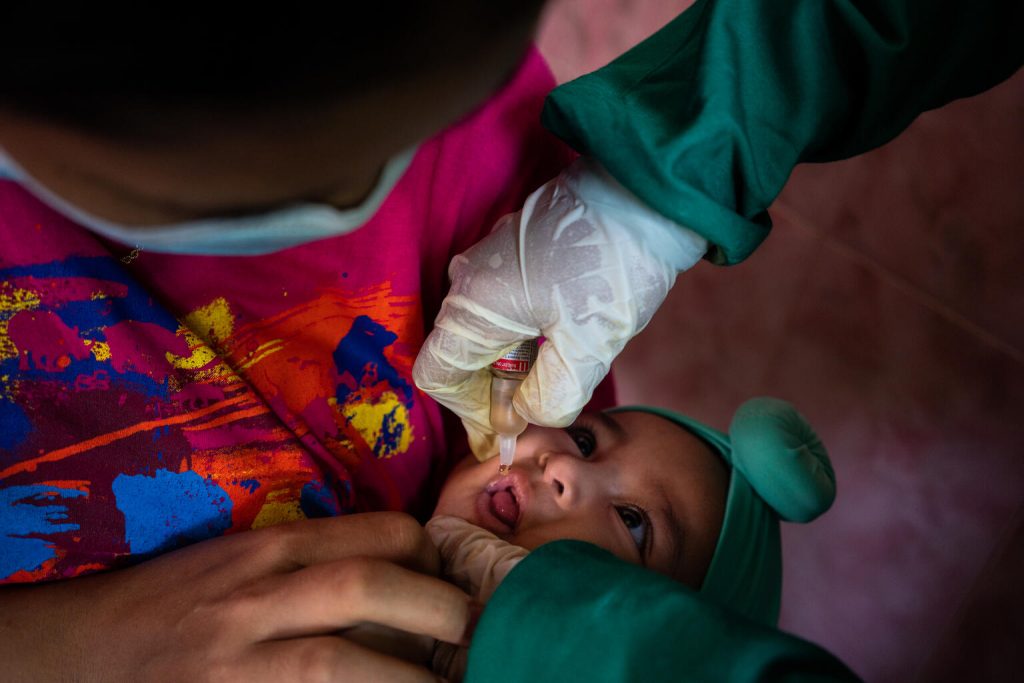
baby vaccinated against polio

Four-month-old Fayra receives a dose of the polio vaccine during an immunization session in Kupang, Indonesia. © UNICEF/UN0567669/Ijazah