
What everyone who supports UNICEF needs to know
UNICEF is getting aid into Gaza now. Despite the challenges, the risks, the bombings and the periods of unacceptable restrictions on aid delivery, UNICEF is still managing to get life-saving food to children every single day.
We can do this because we have one of largest humanitarian logistics networks in the world, capable of rushing aid to the border with Gaza, and staff on the ground permanently in Gaza to receive aid, distribute it – and help families in other ways too.
Keep reading for a behind the scenes view of how it all works, and how you can help.
Exactly how much aid is getting in?
We know our supporters have been following the news, and it can be concerning to hear reports about trucks stopped at borders and aid not getting in. Here we want to reassure you that our teams continue to act out of love and concern for children, even delivering aid door-to-door, reaching starving children and their families in their place of refuge.
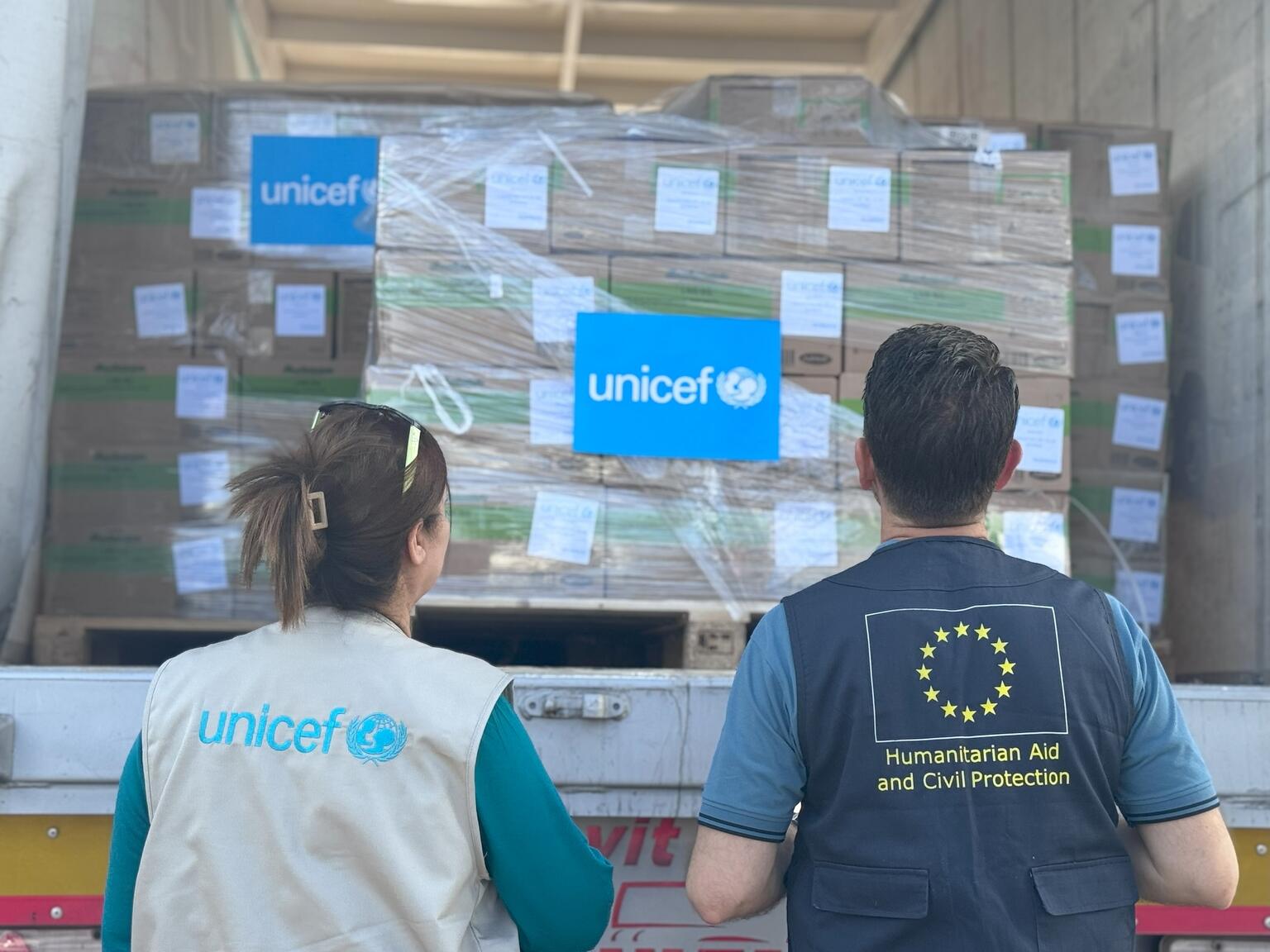
In the first week of the ceasefire, UNICEF has scaled-up aid delivery, collecting 2,145 pallets from the Gaza side of the crossings.
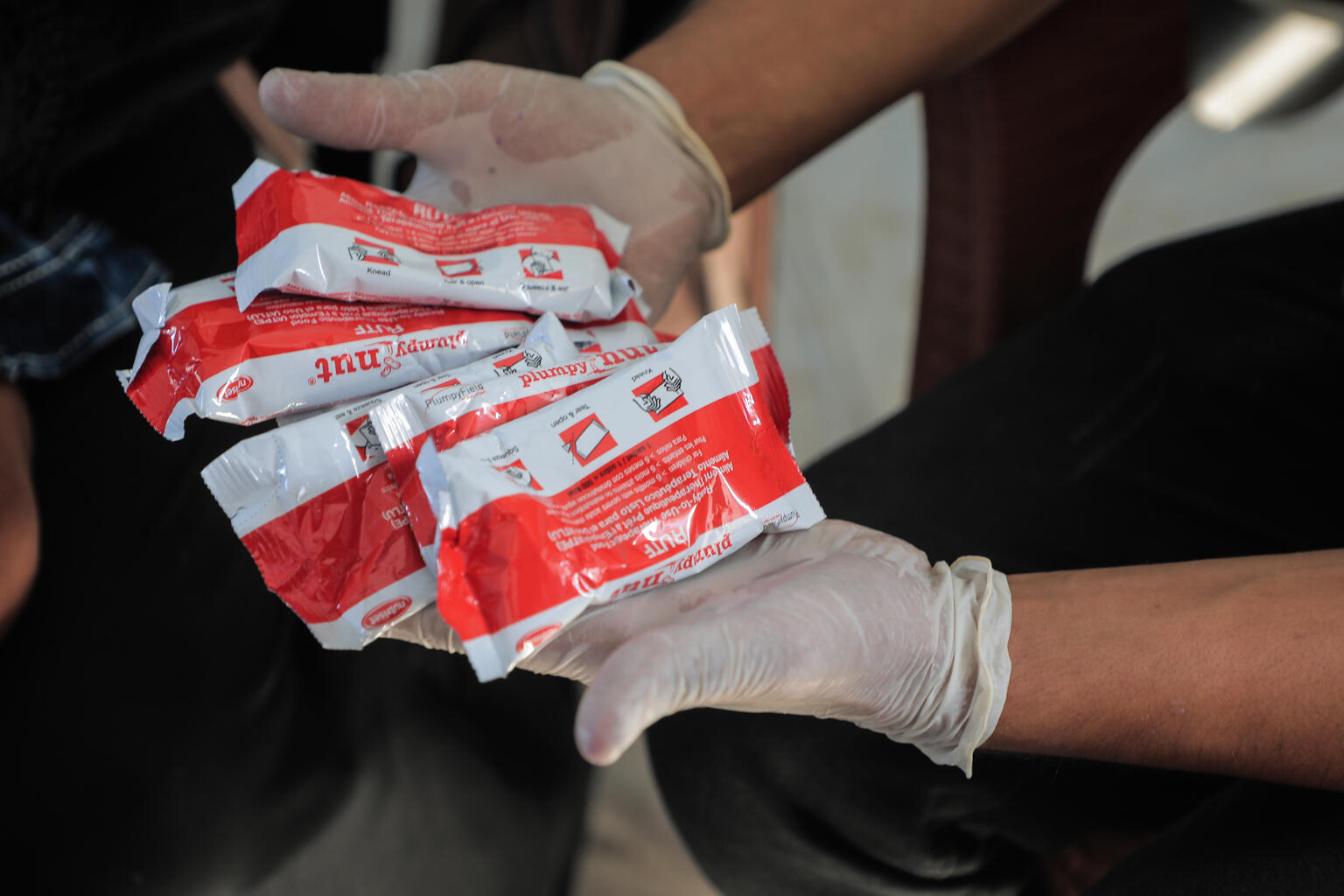
And since May, hundreds of trucks of UNICEF aid have been successfully delivered. That’s 10,596 pallets of life-saving help for children. In September, UNICEF supplied over 2,300 cartons of Ready-to- Use Therapeutic Food – enough to treat over 3,000 children.
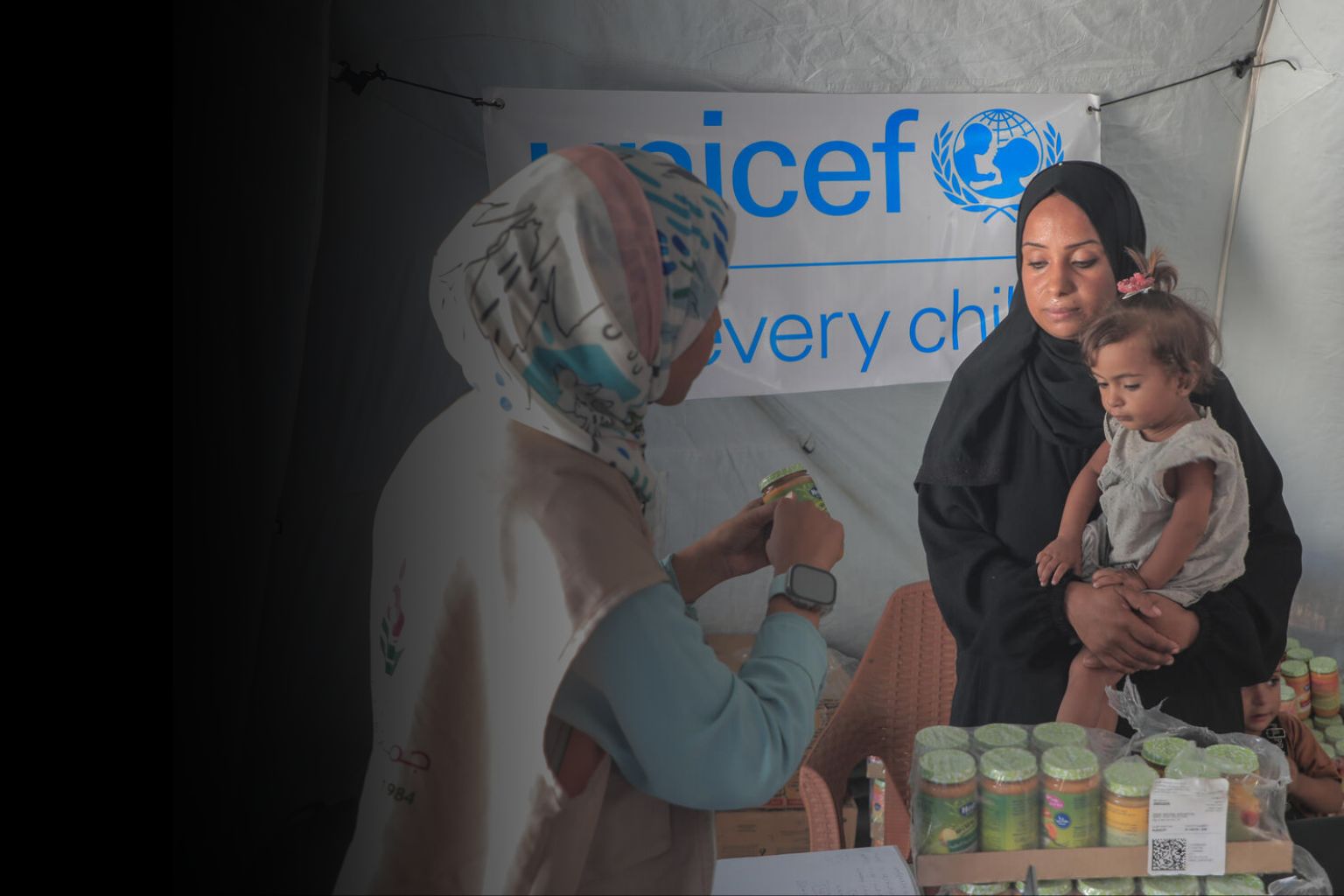
And in just one week recently, we distributed more than 520,000 jars of baby food, 3 million baby diapers and more than 6,000 hygiene kits for families.
UNICEF is delivering life-saving food to families
Last mile delivery
With UNICEF teams on the ground across Gaza, we have ensured the “last mile delivery” to children – this is the final and often toughest stretch of getting aid to people in need.
It’s not just about trucks and warehouses – it’s about reaching families in isolated areas, crossing damaged roads, or finding ways to deliver nutrition and life-saving supplies to displaced and traumatized communities.
It’s the difference between aid being nearby and aid actually saving lives. For example, inside Gaza in one week we dispatched over 88 trucks with 933 pallets containing dignity and hygiene kits, nutrition supplies, and tents.
In some cases, we even delivered with ‘tuk-tuk’ taxis to people’s tents when they needed that extra support due to illness and disability.
When we deliver food, we know it goes to children; when we deliver vaccines, we know it’s going in children’s arms.Joe English, Emergency Communication Specialist for UNICEF.
A day in the life of a UNICEF Logistics Manager
Sospeter Baitwa manages supply and logistics with his team for UNICEF in Gaza. Like all our teams in Gaza, they stay and deliver, putting their own lives on the line, because they love Gaza’s children as their own. Here is Sospeter’s typical day from before the October ceasefire:
🚧Holding Point No 1:
The UNICEF aid convoy waits for permission to enter the Gaza Strip. We’ve been awake since 5.30 in the morning. We’ll see how soon we’ll leave this point to head to the Kerem Shalom crossing.
⛔ Holding point No. 1: 12.20pm
We’re waiting for the green light. We’ve got more than 60 trucks in our convoy today.
🚚 Kerem Shalom Crossing: 4pm
We’re now heading to Deir Al Balah. Starving people line the streets. But we can’t stop. Our thoughts are always with the children desperately waiting for us.
🚚✅ UNICEF Warehouse: 5pm
We made it to the warehouse safely and we’re now unloading. This wasn’t an easy one. A single trip can take up to 20 hours. And tomorrow we’ll do it all over again.
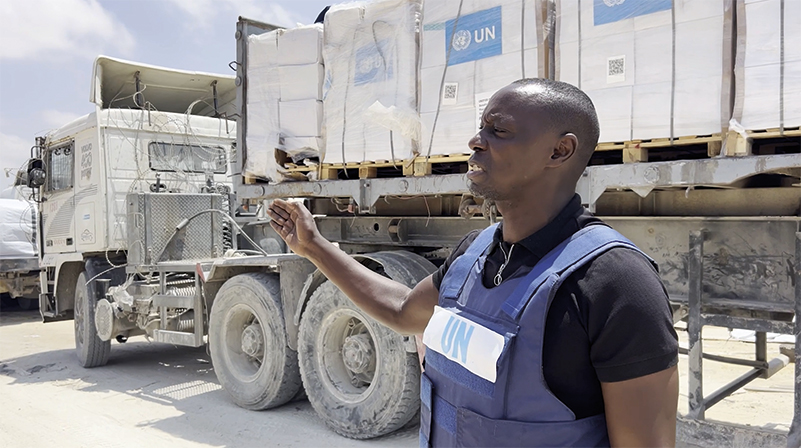
Sospeter Baitwai is just one of UNICEF’s committed staff working in Gaza.
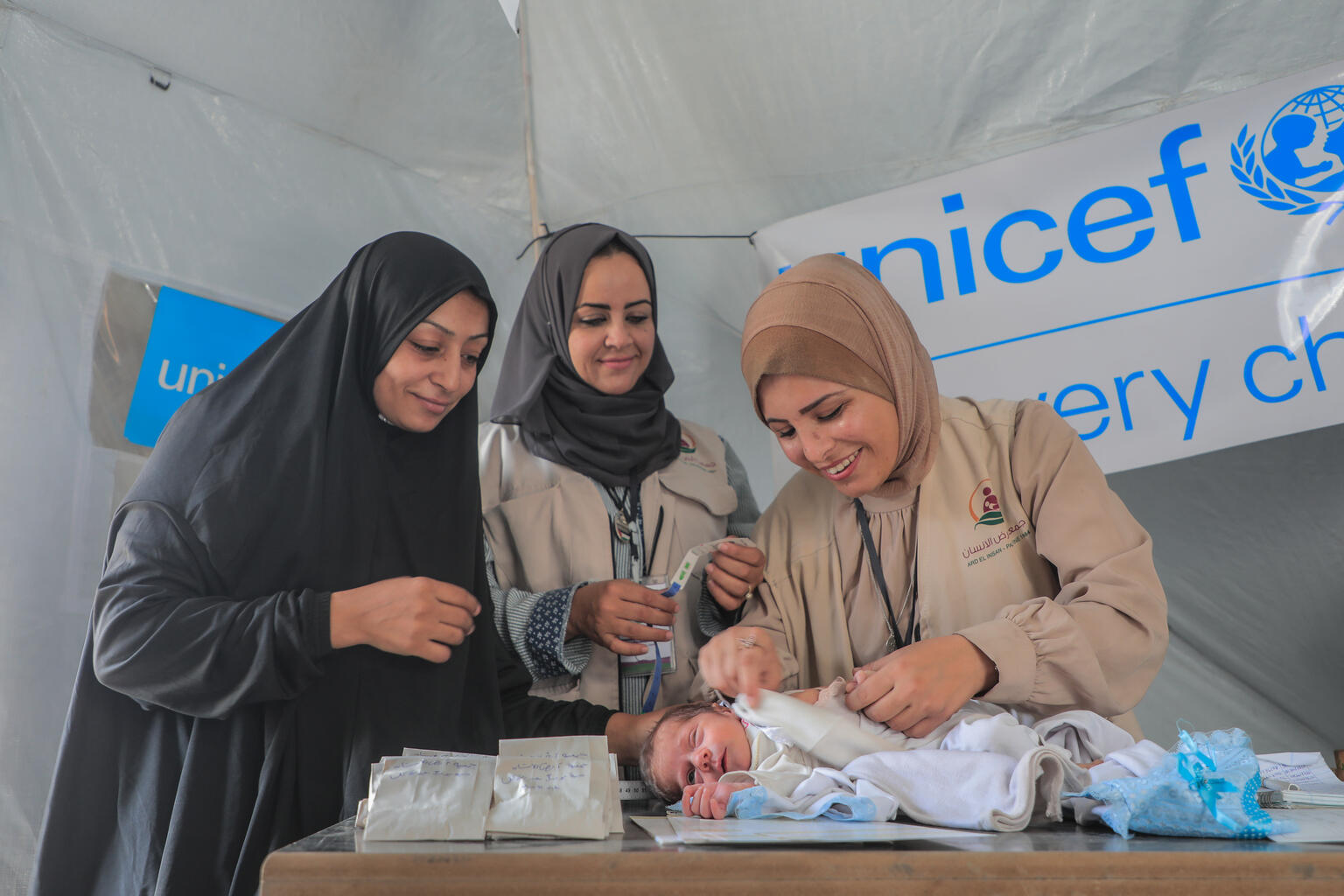
But it’s not all about supplies getting in
When it’s harder to get the aid trucks in, we still keep going. Our teams on the ground never stop working to deliver life-saving services directly to children and their families.
At any one time these services can include:
Providing safe water for 1.5 million people, including 600,000 children.
Screening children for acute malnutrition, including 97,625 children in August alone.
Immunising over 24,500 children against preventable diseases such as measles and polio.
Reuniting over 300 children with their families.
Supporting 30,232 children with activities to promote their mental health and psychosocial well-being.
Since the ceasefire, UNICEF is also scaling up its digital cash programme – currently 100,000 people in Gaza are assisted every month.
This unconditional cash assistance is a real game changer for tens of thousands of families with children as they can obtain a wide range of items from markets, including food, hygiene products, and medicine.
It takes only few days to reach the families in the most cost-effective and efficient way through digital e-wallets.
This life-saving help is possible because of people like you
You can provide UNICEF with the support it needs today to continue delivering aid to starving children.