
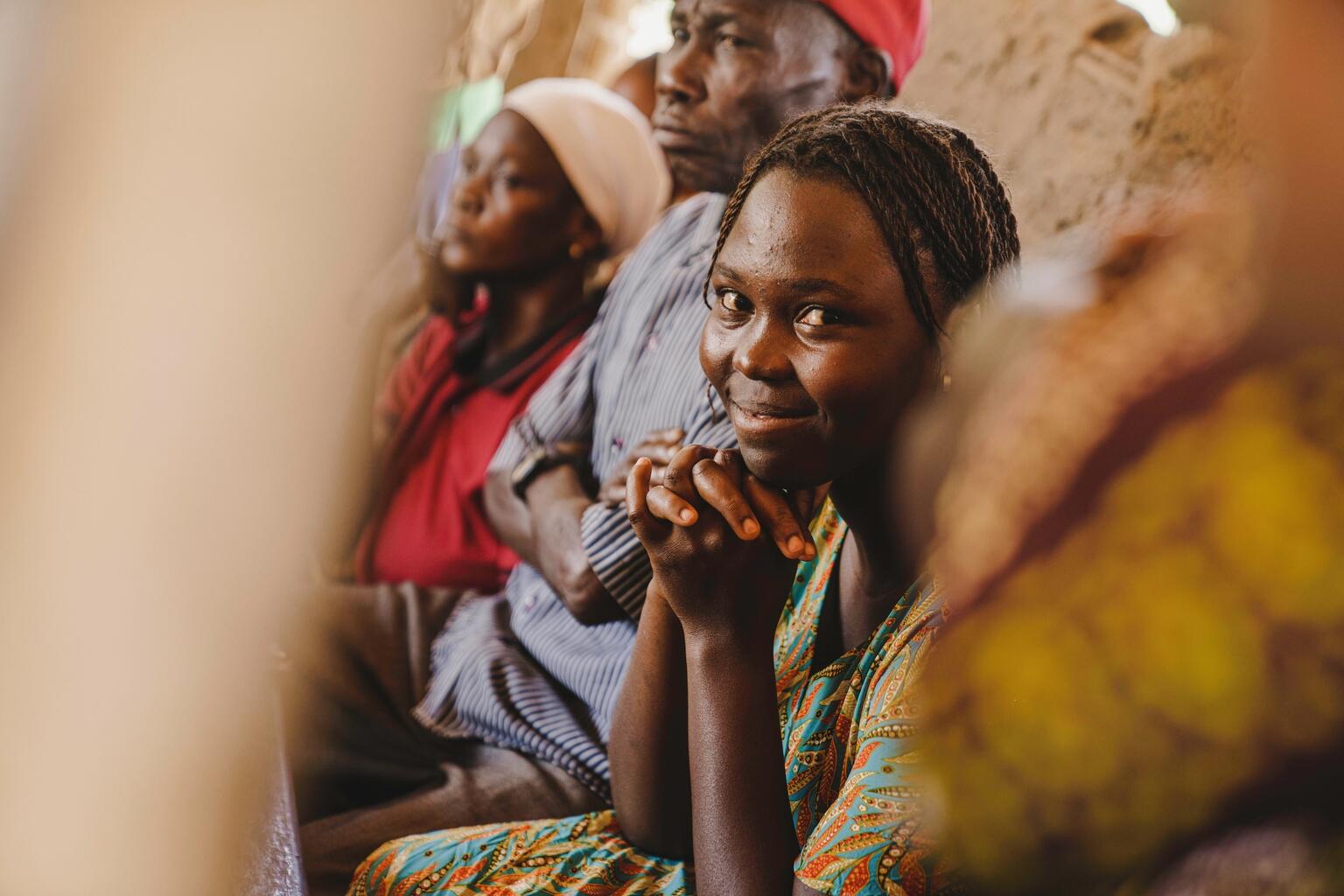
The Democratic Republic of the Congo has a long and tragic history of conflict. In recent times, the east of the country has spiralled into a catastrophic humanitarian crisis that’s putting the lives of millions of children at risk.
Monthly support like yours is critical to helping UNICEF stay and deliver life-saving assistance to children and families in urgent need. Your gifts help to fund vital water and hygiene, health and nutrition, child protection, education, and cash assistance programmes.
DRC and the children there
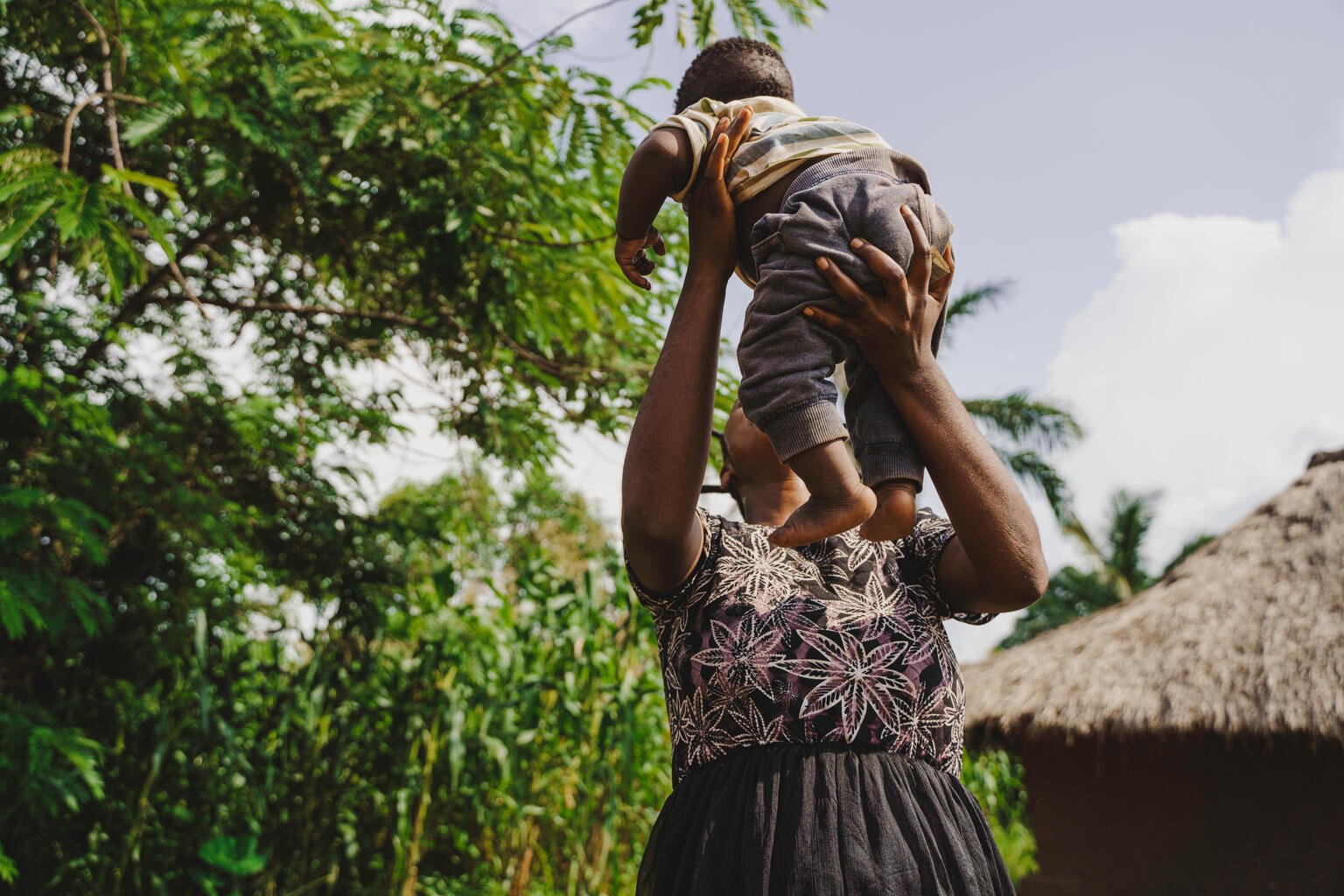
Clémence, a mother of two, plays with her six-month-old baby in her arms outside her home in DR Congo.
Despite vast natural resources, the Democratic Republic of the Congo (DRC) is one of the poorest countries in the world. Extreme poverty, economic crisis, conflict, lack of food and epidemic outbreaks all negatively impact the lives of Congolese people, especially women and children.
The county has the third largest population in Africa with an estimated 98 million inhabitants, 54 per cent of whom are children under 18. Although DRC has made significant progress in reducing child mortality and access to education for children, a majority of children remain deprived of many of their rights.
How monthly gifts help children
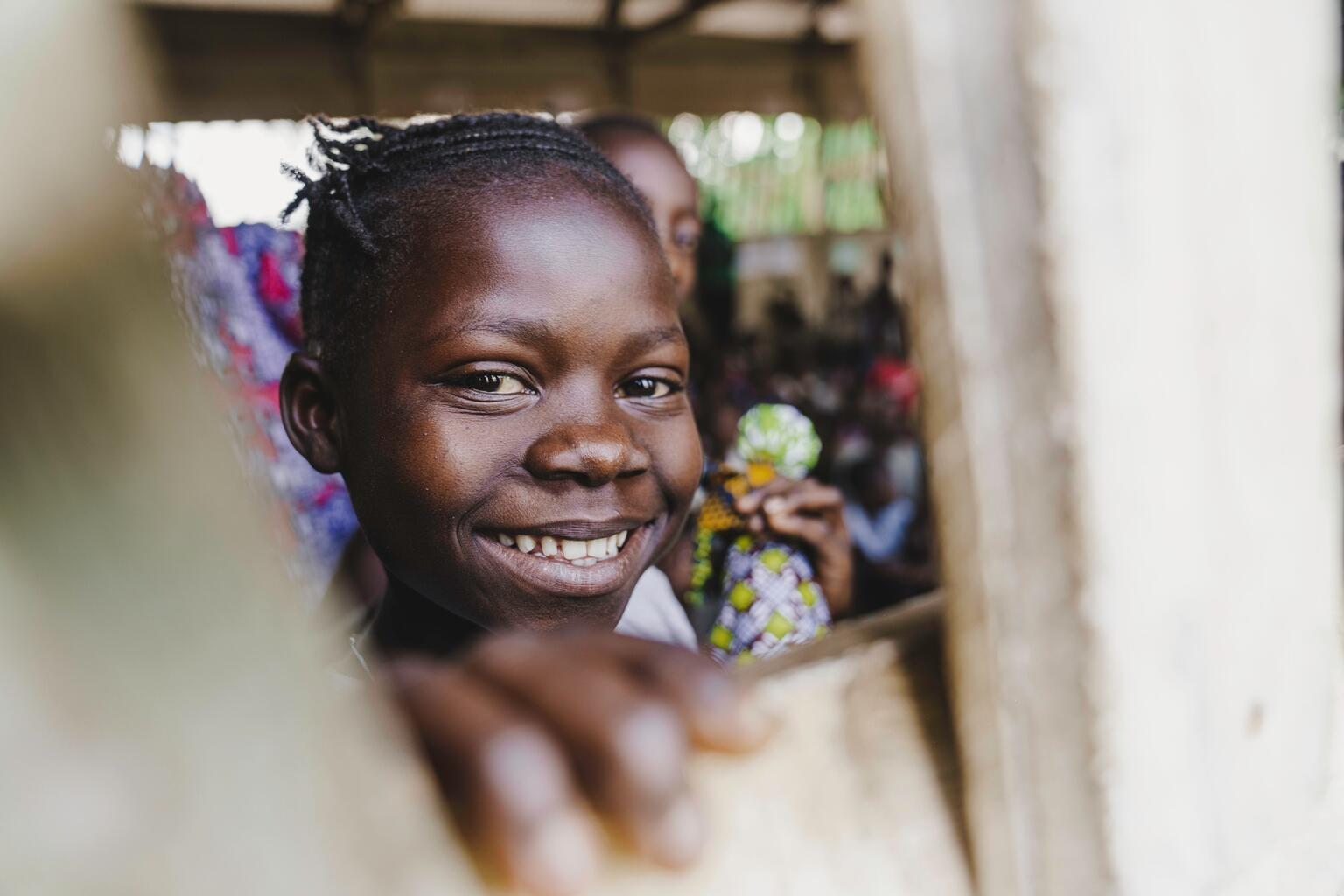
A smiling young girl visits a UNICEF-supported child-friendly space in Ituri province, DR Congo.
You help create child-friendly places for children affected by conflict, including children released from armed groups, survivors of sexual violence, and unaccompanied children. You also help to deliver psychosocial support, and to reunite children with their loved ones. Together, we help deeply traumatised children to heal and rebuild their lives.
You’re helping Amini to catch up!
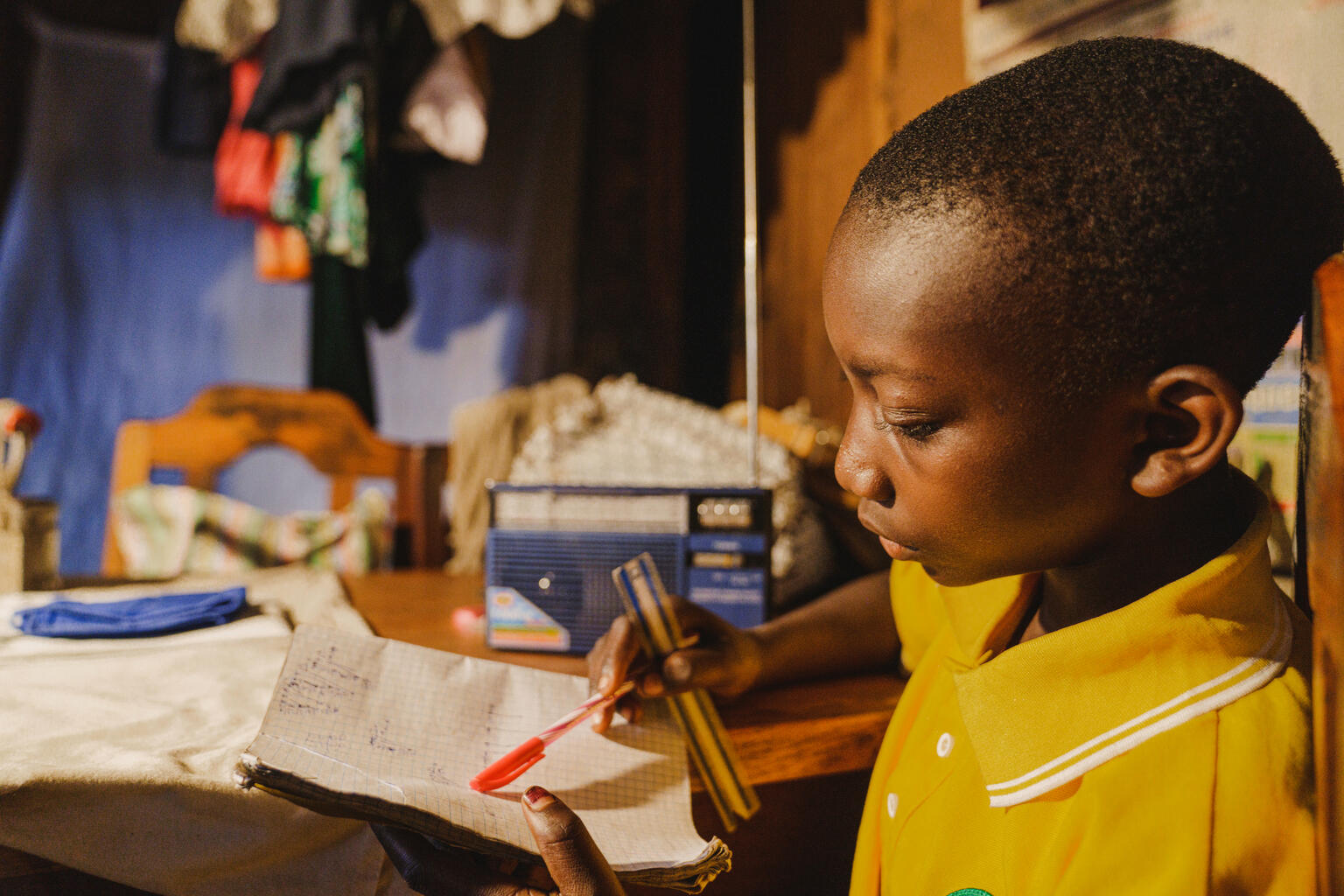
Amini, 12, revises under the supervision of her mother and big sister at home.
Most of the children in Minova, in DRC’s Kalehe Territory, have been forced to stop attending school. Some have fled violence, while others have dropped out due to financial hardship or lack of school spaces.
Amini is one of them. Her schooling was abruptly interrupted when she had to flee the conflict. Upon returning to Minova, her mother – unable to afford school fees for Amini and her sister – made the difficult decision to prioritise her eldest daughter, who is about to sit her final exams.
But now, thanks to kind support like yours, Amini is catching up on her learning. Each day, she joins other children in her neighbourhood to listen to pre-recorded lessons via a small radio set as part of a programme supported by UNICEF.
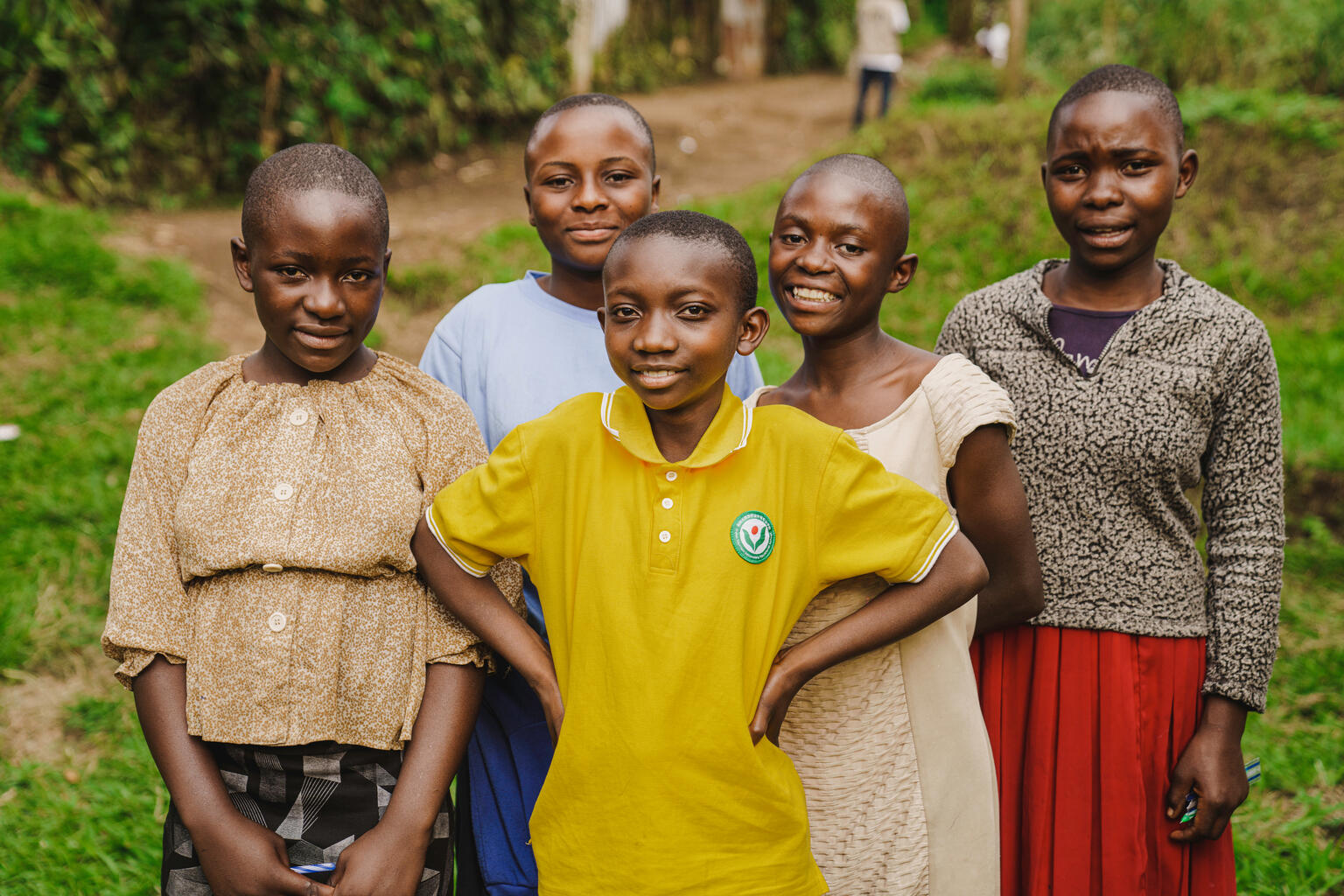
Amini and her friends all attend classes together.
The children are supervised by Grace Lenjika who is a Level 3 teacher and specially trained in this form of teaching. For Grace, supporting children like Amini is a natural choice. “These children are intelligent,” she says. “If they were in a normal school, they would truly be excellent students.”
At the end of the day, learning continues at home. For 30 minutes, a class is broadcast on a local radio station, giving children the chance to revise.
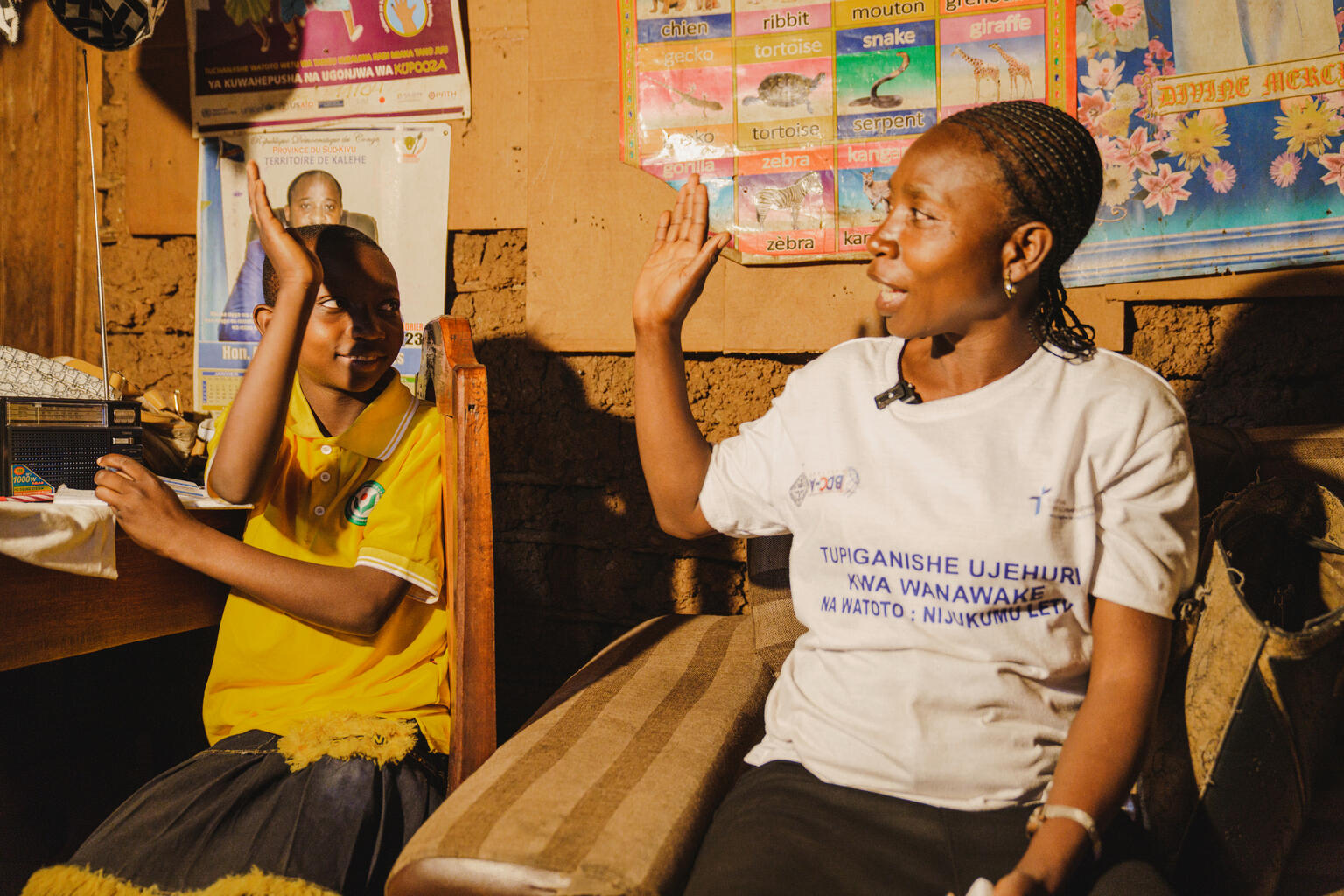
And that’s exactly what Amini does with help from her mum and her big sister.
“When Amini returns from the radio class, she takes out her notebook to study. When we see her getting good marks, we feel very proud,” says Amini’s mother.
Thanks to help like yours, in Kalehe Territory over 1,000 conflict-affected children have benefitted from distance learning. More than 7,500 children have received individual school kits, and over 100 teachers have been trained.
Become a Monthly Donor
Help Children Like Amini achieve a bright future