
In Ivory Coast where 1.6 million children are out of school, UNICEF is helping to turn plastic waste into materials for building classrooms.
According to UNICEF Representative Dr. Aboubacar Kampo, “One of the major challenges facing Ivorian school children is a lack of classrooms. They either don’t exist, or when they do, they are overcrowded, making learning a challenging and unpleasant experience.”
To help meet the needs of children without a place to learn, in 2019, UNICEF partnered with Colombian social enterprise, Conceptos Plasticos. We ran a pilot programme to test whether recycled plastic bricks were a more cost-effective and efficient way to build classrooms. The first classroom we built took just five days.
A Future in Plastic
After the success of the pilot programme, UNICEF supported the opening of the first-of-its-kind factory in Ivory Coast. Plastic waste is collected in and around the country’s largest city, Abidjan, by local women, giving them a reliable source of income and the factory the raw material it needs.
It takes five tonnes of plastic to build a classroom, and the factory is able to recycle 9,200 tonnes of plastic waste per year. Because of this initiative children in certain areas are now able to attend school – for the first time ever!

“My School Is the Most Beautiful in the World.”
Every evening after school, Anne’s father Arsène helps her with her homework. Arsène teaches at the village's new school built from recycled plastic bricks. “I love working in this environment,” he says. “There is a lot of light coming in, and it is not too hot in the classroom. The conditions are ideal to teach and for children to learn.”
“I am very impressed by the big blackboard and the cleanliness,” says Anne. “There is even electricity, and we now have toilets. This gives me hope because if it can be done here, it can be done in other villages.”
Helping Children Receive an Education
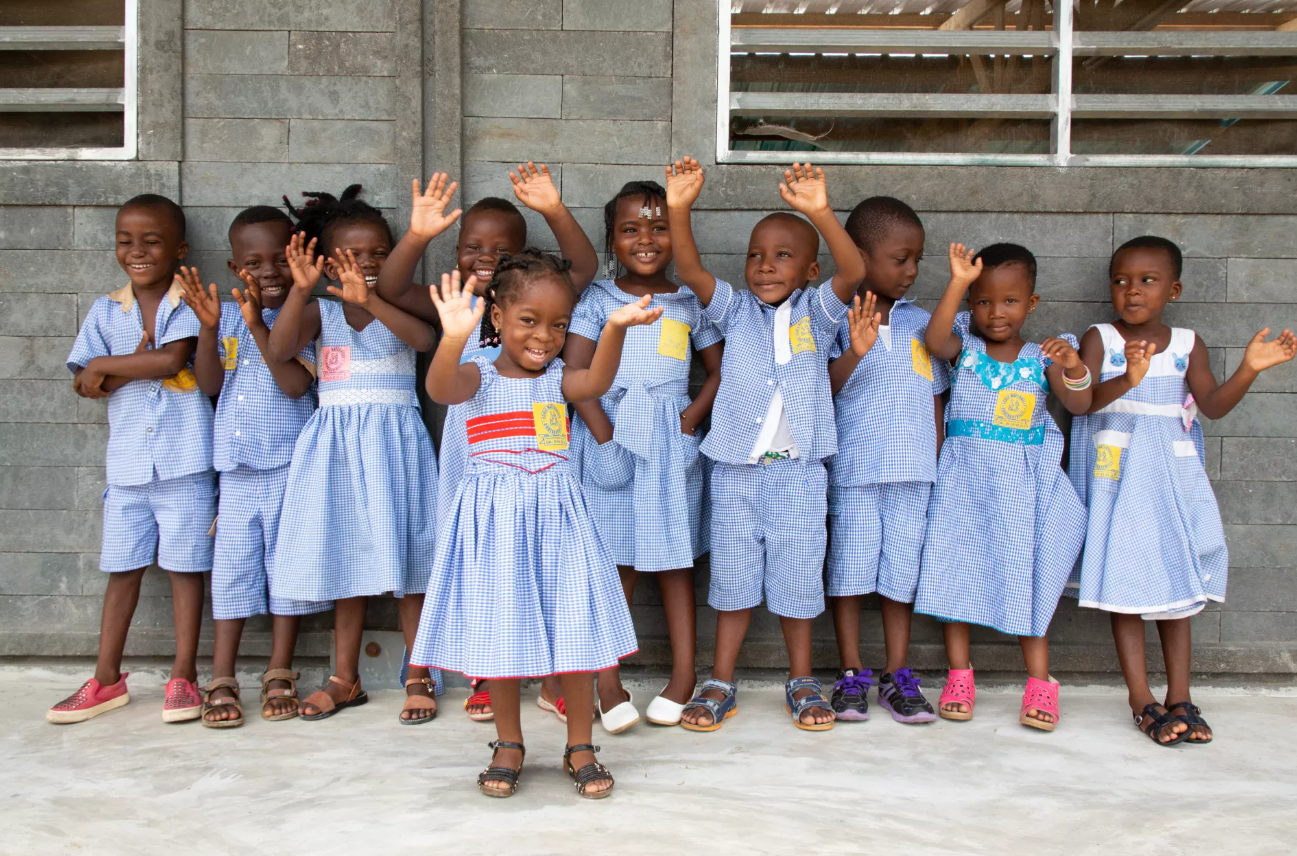
Because of this innovative technology, hundreds of children in the Ivory Coast are now going to school.
Celebrating this milestone, UNICEF Representative Dr. Aboubacar Kampo said, “In certain areas, for the first-time, kindergartners from poor neighbourhoods are able to attend classrooms with less than 100 other students. Children who never thought there would be a place for them at school can learn and thrive in a new and clean classroom.”
This life-saving help is possible because of people like you
You can provide UNICEF with the support it needs today to continue delivering aid to starving children.