
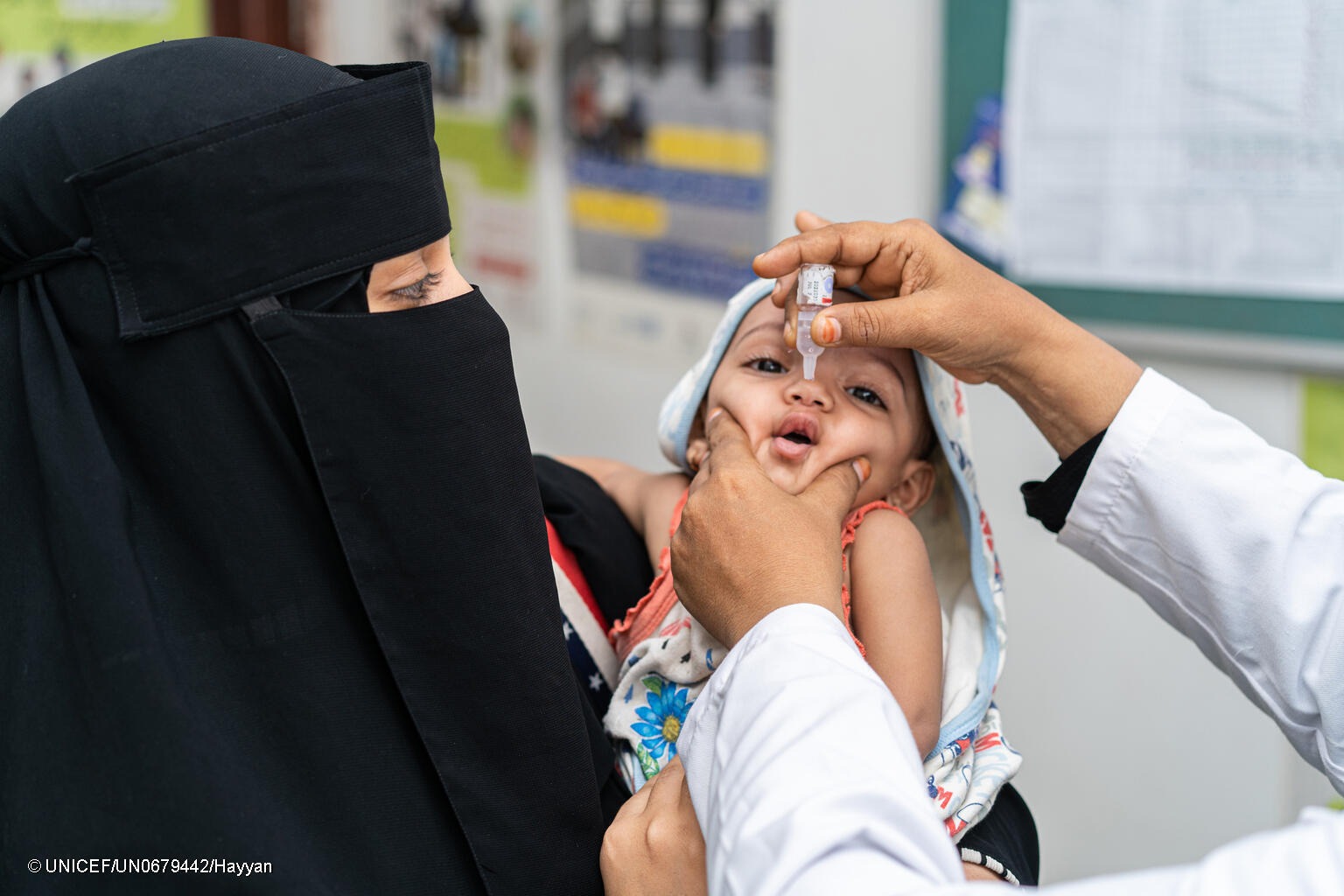
Give the gift that lasts a lifetime. Support the Vaccine Fund.
YOUR IMPACT FOR CHILDREN:
- €5,000 could help protect 26,260 children from polio or deliver lifesaving diphtheria, tetanus and whooping cough vaccines for 21,000 children.
- €10,000 could fully vaccinate 4,600 women of childbearing age against maternal and neonatal tetanus in endemic countries.
- €30,000 could fund an advocacy programme for 25,000 caregivers to build understanding of immunisation and address concerns about vaccines.
- €50,000 could ensure that 860 children are covered by the full vaccination schedule against 11 different diseases before reaching 2 years of age.
- €100,000 could protect 60,000 children against measles, rubella and polio through a major immunisation campaign.
YOUR EXPERIENCE AS A SUPPORTER:
- Access to a dedicated contact point at UNICEF Ireland to keep you connected and on the inside track.
- Impact reports and updates on UNICEF’s immunisation programmes, so you can see the life-changing returns on your generosity.
- Invites to UNICEF expert web briefings on relevant programmes, including opportunities for Q&A with UNICEF programme teams.
- Digital assets and acknowledgement opportunities for corporate support.
- Visit UNICEF Supply Division in Copenhagen for a behind-the-scenes look at the logistics operation that makes UNICEF’s vast vaccination programmes possible. (Dependent on level of support.)
- The knowledge that your support is protecting children and communities worldwide from the scourge of deadly diseases and you are helping to save lives every day. The lifelong protection provided by vaccines means that the benefits of your generosity will cascade well into the future.
Give the gift that lasts a lifetime. Support the Vaccine Fund.
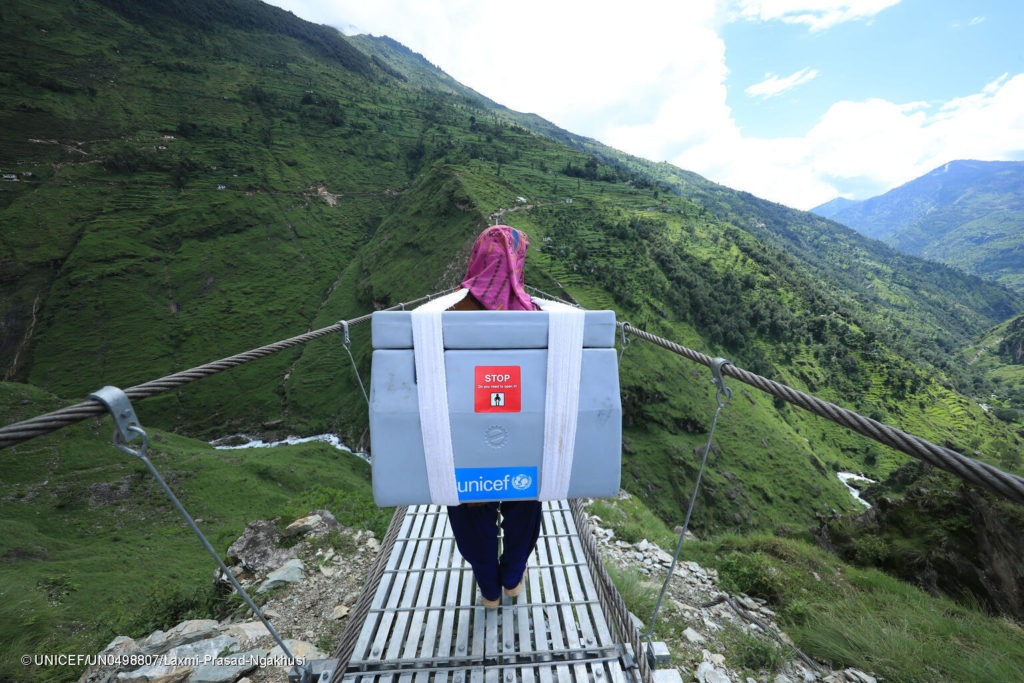
A UNICEF-supported health worker in Nepal transports vaccines to the remote Pipalchauri Health Post in the far-west of the country. © UNICEF/UN0498807/Laxmi-Prasad-Ngakhusi
Despite these longstanding benefits, we are currently witnessing the largest sustained backslide in childhood vaccination rates in three decades.
Violent conflicts, displacement, pandemic-related disruptions, and vaccine misinformation have cut children off from routine immunisations.
Some 25 million children are now missing out on life-saving vaccines every year, placing them at risk of preventable diseases like measles and polio.
As the largest single vaccine buyer in the world, UNICEF procures more than 2 billion doses of vaccines annually for routine childhood immunisation and outbreak response.
In over 100 countries, we work with governments, businesses, non-governmental organisations, and other UN agencies to engage communities, procure and distribute vaccines, keep supplies safe and effective, and facilitate affordable access for even the hardest-to-reach families.
Vaccine delivery is just one aspect of our work in this field. UNICEF also invests in community health systems to improve supply chains, data systems and disease surveillance – helping more children receive the protection they need.
Vaccinating every child also means investing in new approaches with the promise of ensuring sustainable, equitable funding and a pipeline of game-changing vaccines and cutting-edge technologies.
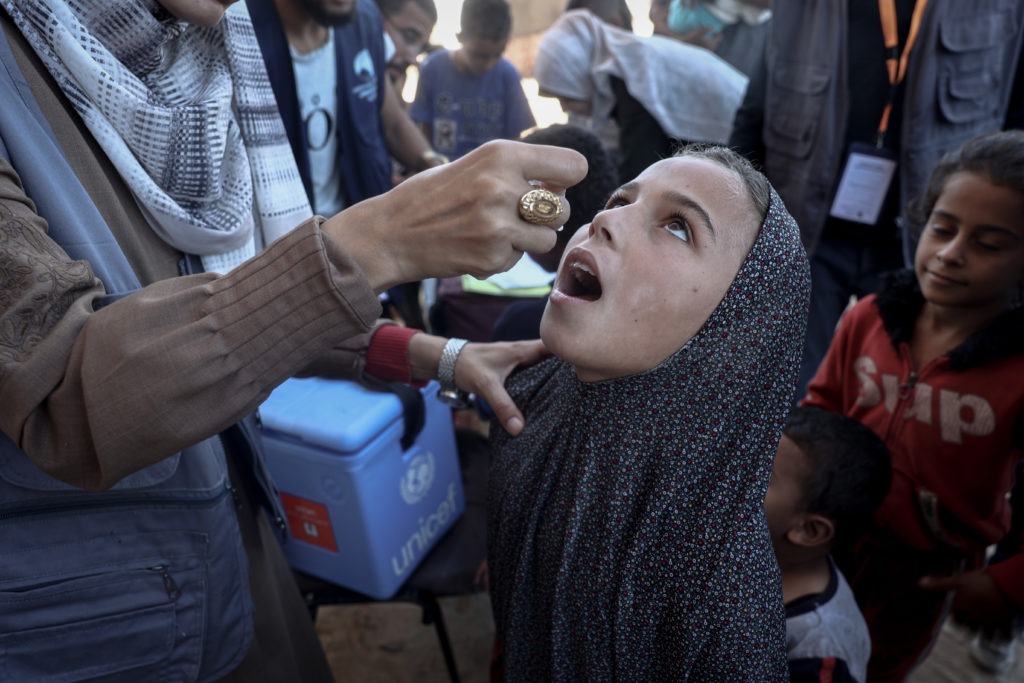
During the second round of the polio vaccination campaign in the Gaza Strip, a mobile team in Khan Yunis is providing children with polio vaccinations and Vitamin A. © UNICEF/UNI668492/El Baba
Spotlight on Gaza and Sudan
Childhood immunisation in challenging humanitarian contexts
In the Gaza Strip, in February 2025, UNICEF and partners implemented a five-day mass polio immunisation campaign. Nearly 603,000 children under 10 years of age were reached with oral vaccines to protect them against poliovirus. Taking place during the ceasefire, comprehensive and simultaneous access enabled health workers to reach more children with vaccines and raise wider community awareness of the life-saving importance of vaccination.
Sudan is among the first African countries to introduce the ground-breaking malaria vaccine, a significant accomplishment in a country grappling with ongoing conflict. Recommended for children aged 5–12 months, the vaccine rollout is being supported by UNICEF and partners, and is expected to dramatically reduced child hospital admission and mortality from the disease.