
Reaching every child with life-saving support
Across the world millions of children are living amid conflict, humanitarian disasters and other crises.
They face a convergence of obstacles to a fulfilling childhood, including climate shocks and poverty. The need for action has never been greater.
Through our supporters, UNICEF is reaching these children with life-saving aid and support – and always defending their rights.
In this article, we share the stories of just some of these children in Gaza, and illustrate how support from places like Ireland is helping them achieve a better future.
Keeping children warm in winter
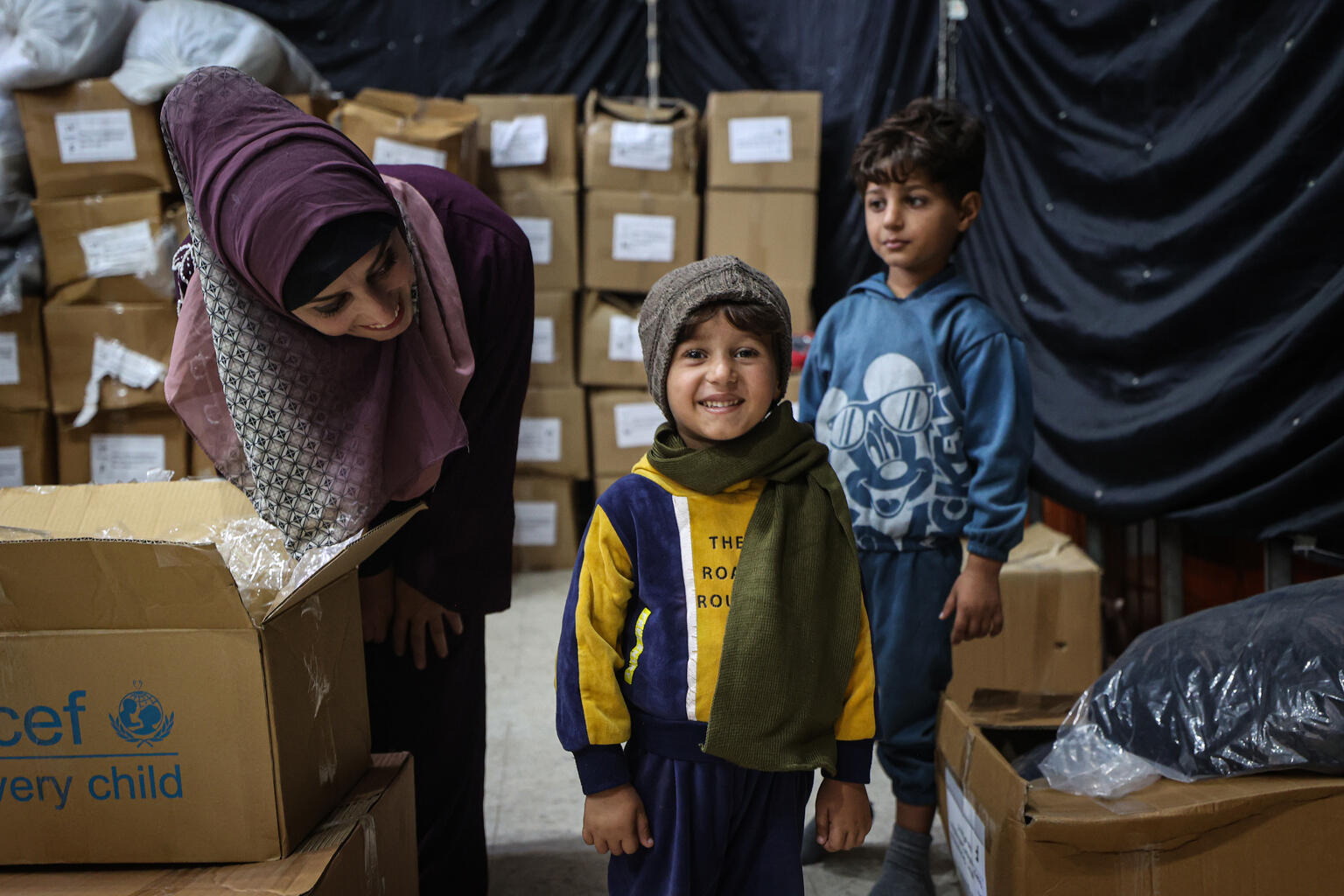
As winter temperatures dropped across the Gaza in November 2025, thousands of displaced families were living in damaged homes or makeshift shelters, exposed to rain, wind and cold. For children, the lack of adequate clothing increased the risk of illness at a time when access to healthcare was already severely constrained.
That’s why UNICEF distributed winter clothing kits to children, ensuring they had essential protection against the cold. Each kit included a winter jacket, shoes, a heating set, a t‑shirt, socks and trousers, tailored for children from newborns to teenagers.
By the end of November, UNICEF had delivered more than 206,000 winter clothing kits. Distributions continued in the weeks that followed, prioritising the most vulnerable children.
For children with underlying health conditions, warm clothing is not just a comfort but a necessity.
“Taim has a heart issue so having warm winter clothes is especially important for him,” one parent said. “I am very happy he received these clothes today but my three other children are still without. I need to find some for them.”
UNICEF remains on the ground in Gaza supporting children like Taim every day.

Haya’s story: carrying water through war
Nine‑year‑old Haya Abu Hajer begins each day with the same exhausting journey. Since her family was displaced from Juhr Al‑Deek, she now lives in Al‑Bureij Camp, where clean water is scarce and every drop must be fetched by hand.
“Every day, I walk a long distance to fetch drinking water,” she says. “I can’t describe how exhausted I feel carrying the jerrycan all the way home… I’m just a child and I can’t carry heavy things – but I can’t live without water.”
Haya’s daily struggle reflects the broader crisis facing children across Gaza. Families continue to endure unimaginable hardship, with water production facilities operating at drastically reduced capacity and access to safe water nearly collapsed.
On 26 July 2025, a rare moment of hope emerged when the Southern Gaza Desalination Plant was reconnected to the electricity grid. At full capacity, it can produce 18,000 cubic metres of safe drinking water a day, enough to serve up to one million people when combined with domestic supplies.
Across Gaza, the scale of water insecurity is overwhelming. Ninety‑six per cent of households face moderate to severe difficulty accessing clean water.
For Haya, these statistics translate into a simple but heavy truth: without water, her family cannot survive. So she keeps walking, carrying more than just a jerrycan. She carries the weight of a childhood interrupted – one shaped not by play or school, but by the long, tiring path between thirst and survival.
Through ongoing WASH efforts, UNICEF and partners continue working to restore water access wherever conditions allow, ensuring that children like Haya no longer have to shoulder this burden alone
Can you help children in crisis?
With support from you, UNICEF can reach children with life-saving supplies now.
Support children with disabilities in Gaza
By 2025, nearly two years of war had left thousands of children in Gaza living with disabilities. Some were injured during bombardments. Others had pre‑existing disabilities that became harder to manage amid displacement, insecurity and the collapse of essential services. For these children, the risks were acute. During airstrikes and repeated displacement, children with disabilities faced greater danger and fewer options for protection.
The scale of need was unprecedented. More than 42,000 children were living with war‑related injuries, and over 10,000 injured children faced long‑term or permanent disability.
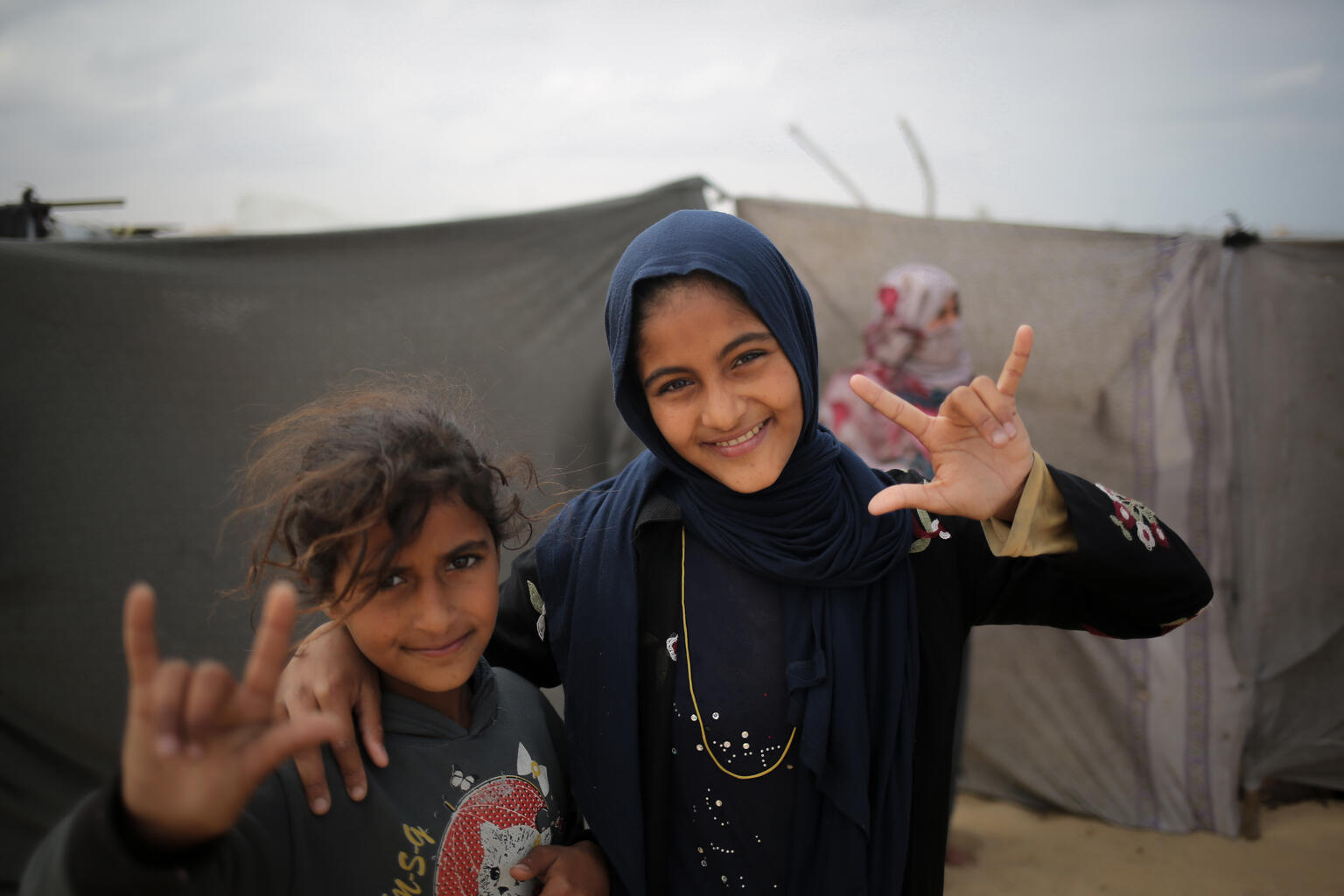
For families, the impact was deeply personal. Souad, aunt to Mariam, 13, and Ali, 9, described the challenges they faced after the children lost their hearing during the war. Their mother was killed, leaving Souad to care for them.
In response, UNICEF worked throughout 2025 to reach children with disabilities with essential assistive devices, helping to restore access to learning, communication and daily life. When Souad learned that hearing aids were available for the children, the news brought unexpected relief.
“When I received the message to collect the hearing aids, it was hard to believe,” she said.
For other families, injuries had altered childhood forever. Yousef Al Daqee spoke about his nieces, Hanan and Misk, who lost their legs when an airstrike hit their home.
He said: “Whenever Hanan sees other children playing, she asks, ‘Why can’t I play like them?’”
Over the course of the year, UNICEF supported nearly 20,000 people with disabilities across Gaza, provided care for 548 injured children, and distributed more than 500 wheelchairs to children like Hanan and Misk.
This support underscored a core commitment of UNICEF’s response in Gaza: ensuring that children with disabilities were not overlooked, even in the most extreme humanitarian crisis.
Providing learning and hope
Education is a cornerstone of child development, providing structure, safety and a sense of belonging that helps children cope during crisis and build for the future. In Gaza, more than two years of conflict had left learning severely disrupted. For an estimated 700,000 school‑age children, access to education in 2025 was vital not only for academic progress, but for wellbeing, protection and recovery.
The scale of destruction was immense. Nearly all education facilities in Gaza were damaged or destroyed, with at least 92 per cent of schools requiring full reconstruction or major rehabilitation.
In response, UNICEF expanded non‑formal learning through the Back to Learning programme. The initiative focused on reaching children wherever they were, while laying the groundwork for a gradual return to school buildings when conditions allowed.
Throughout 2025, UNICEF provided temporary learning opportunities to 135,462 children across 111 temporary learning spaces in the Gaza Strip.
For Jana, a secondary‑school student from North Gaza, learning had once been a source of possibility. Before the war, she was enrolled in a UNICEF‑supported STEM programme, where she developed new skills and imagined a future shaped by education.
The war changed everything. In 2025, Jana was displaced to the south with her family, living in a makeshift tent with her three siblings.
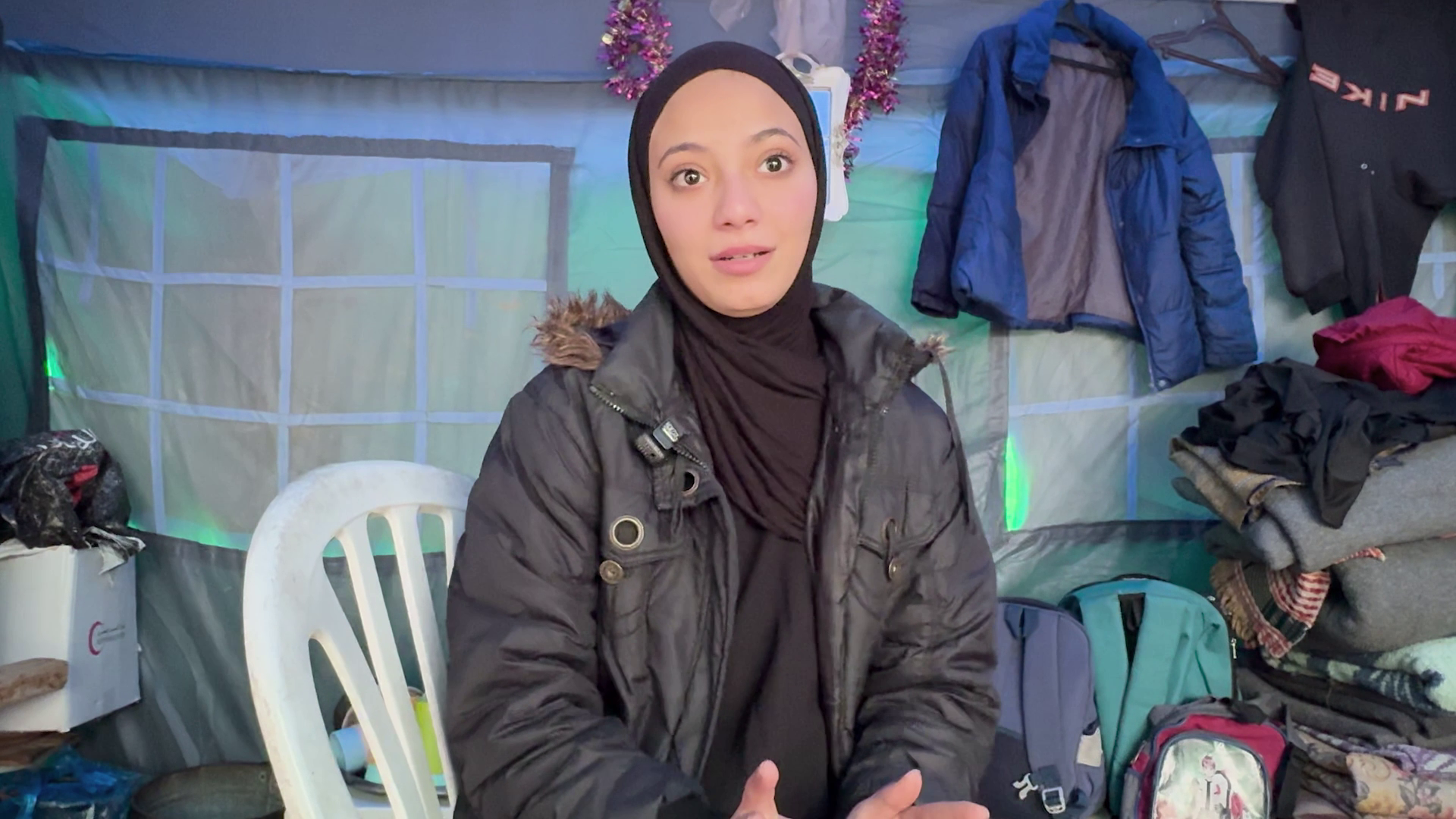
Despite flooding during the winter rains and freezing temperatures, Jana continued to study, working on school projects in an environment with almost no basic resources. Speaking about her situation, she explained the challenges she faced as a Tawjihi student.
“I cannot afford private lessons, just like any girl in the Gaza Strip,” she said. “I’m afraid I won’t reach the grades I’m aiming for, or have the same successes I had before.
“Because now, as you can see, there’s no proper environment to study in. There’s no passion, no energy. No school, no electronic devices to study with. No electricity, no light. At night, there’s only the light from my phone.”
For Jana and thousands like her, education was not simply about exams. It was about identity, continuity and hope.
“We are the future builders of Gaza,” she said. “How can you build a future when nothing is available?”
UNICEF’s education response recognised learning as a critical protective intervention. Children make up half of Gaza’s population and hold the greatest potential for long‑term recovery.
For children like Jana, education remained a lifeline, and a foundation for rebuilding their futures, even in the midst of crisis.

Protecting children through vaccination
By 2025, two years of conflict had severely disrupted routine health services across Gaza . As a result, tens of thousands of children had missed essential vaccinations, leaving them exposed to preventable and potentially life‑threatening diseases.
In response, on 9 November 2025, UNICEF and its partners launched a catch‑up vaccination campaign across Gaza, aiming to reach more than 44,000 children who had missed their routine immunisations. The campaign focused on restoring protection against diseases such as measles, polio and pneumonia, which pose heightened risks in humanitarian emergencies.
Health teams travelled to primary health care centres, shelters and displacement sites to reach families wherever they were living. By bringing services directly to communities, the campaign helped ensure that displaced children were not excluded from life‑saving care because of insecurity or repeated movement.
By reaching children with life‑saving vaccines, UNICEF helped reduce the risk of disease outbreaks, protected children’s health and strengthened community resilience. Even amid crisis, restoring routine immunisation remained central to safeguarding every child’s right to survive and thrive.

Helping children heal through psychosocial support
By 2025, prolonged conflict, repeated displacement and loss had left deep emotional scars on children across Gaza. Many had witnessed violence, lost family members and been forced to flee their homes multiple times. For these children, survival alone was not enough. They needed safe spaces to process fear, grief and uncertainty.
Sarah, 12, was one of thousands of children displaced by the war. During her escape, Sarah was separated from male family members and detained for hours before being told to leave. She ran barefoot through the night with her mother and sisters. Her father was later released. Her brother never returned.
By 2025, Sarah’s family had been displaced nine times. They were living in her grandmother’s house.
After everything she had experienced, Sarah found ways to cope through creativity. She sang, drew, wrote and took photographs, using art to express emotions she struggled to articulate. She attended a learning space each day and, alongside her older sister Yosra, participated in Mental Health and Psychosocial Support (MHPSS) activities provided through a UNICEF‑supported safe space.
Through MHPSS, Sarah learned practical coping techniques to manage sadness, fear and painful memories. When conversations reminded her of displacement, the destruction of her home or her missing brother, she used grounding techniques learned in the safe space.
“When someone talks about what happened to my family, my brother, or our displacement, I feel sad, so I use the safe space technique,” she explained. “I imagine my home garden with the trees, the grass, and the beautiful view. I imagine all my brothers, including Anas, and we are playing together and feeling happy.”
Creative expression became central to Sarah’s healing. Singing, in particular, helped her regulate her emotions and rebuild confidence.
Through MHPSS activities, children like Sarah were given tools to cope with trauma, rebuild confidence and reclaim aspects of childhood that conflict had taken away.
In a context where loss was widespread and futures felt uncertain, safe spaces offered children something essential: the chance to feel seen, supported and hopeful again.