
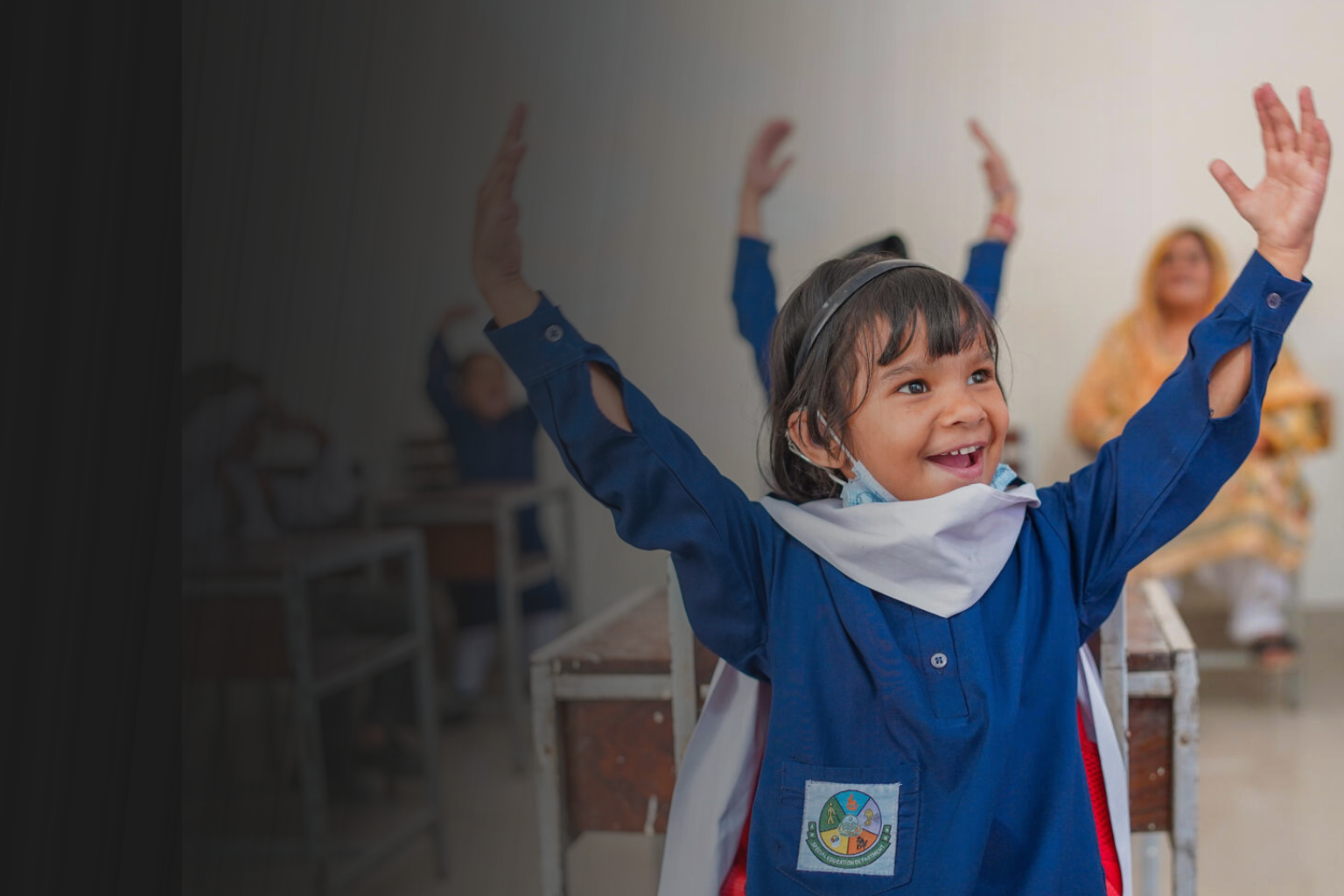
Every child has the right to learn
The world has never been closer to universal education, but closer isn’t the same as there. While nearly 90% of children now attend primary school, millions are still being left behind: worldwide, 251 million children and youth are out of school. This includes children living in poverty, children with disabilities, and girls in communities where their futures are decided by others.
At UNICEF, we know quality education is a right. That’s why we go to the places where the gap is widest, and we work to close it.
In this series, we share stories from our teams in the field and the children they work with, stories that show what’s at stake, and what’s possible when communities get the support they deserve and have every right to.
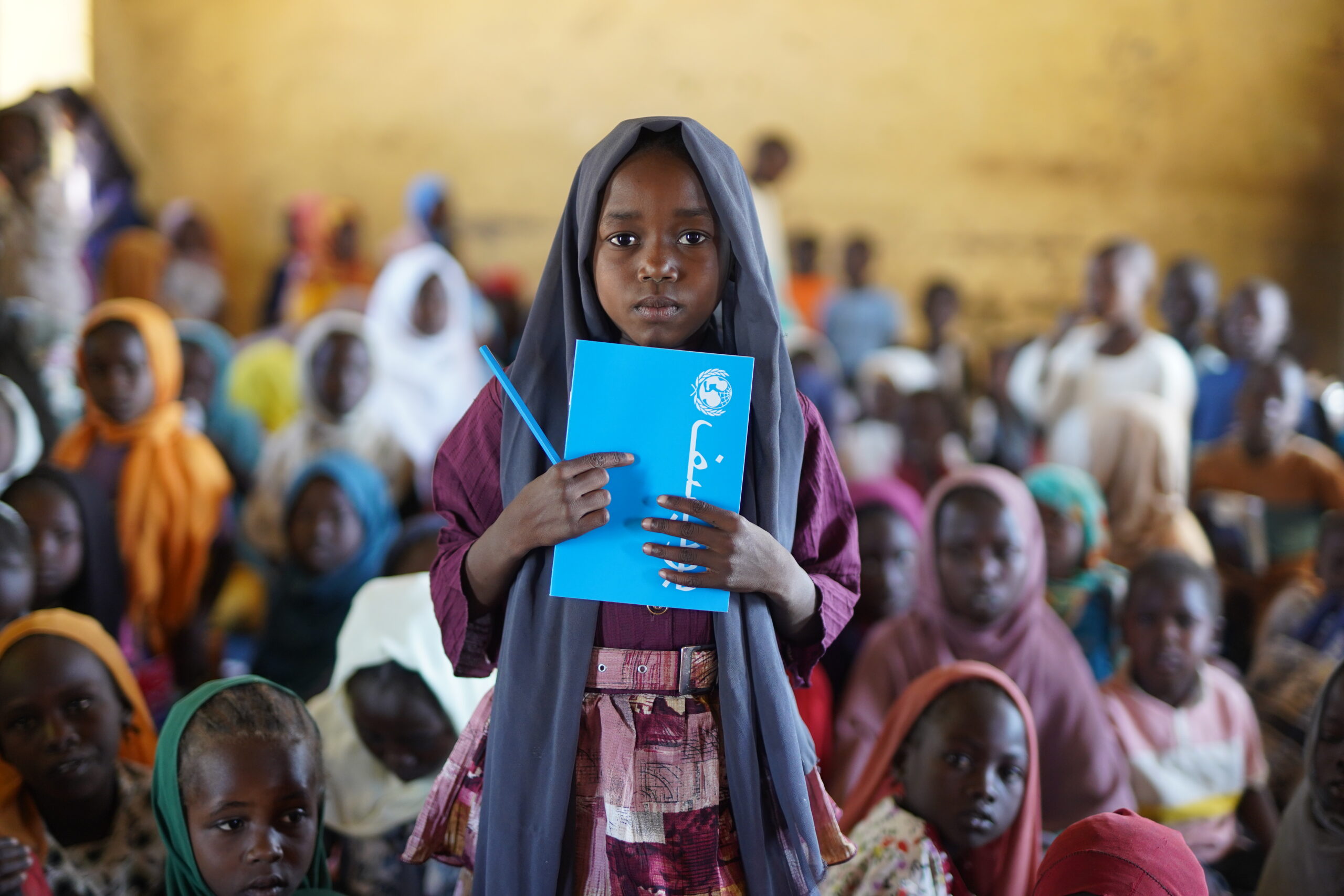
Samar’s story: reopened schools in North Darfur
Samar, 7, was forced to flee conflict in Al Fasher, Sudan. But with a new set of books, pencils and colours supplied by UNICEF and partners, she has still managed to begin her first year of formal education.
When asked what she hopes for, she says: “I want to become a teacher to help other children learn even in circumstances such as these.”
Families who escaped the violence settled where they could, and many children lost access to schooling for long periods. Classrooms and materials were left behind or destroyed, and teachers were displaced along with their communities. When Tawila’s schools reopened, the community mobilised to encourage every school‑aged child to return to class.
UNICEF supported the reopening by distributing educational supplies for students and teachers, helping to create a functioning learning environment after months of disruption. These materials support continuity of learning for children who have faced repeated upheaval.
Samar’s story reflects the wider effort to restore education in conflict‑affected areas. Her return to learning is part of a community’s attempt to rebuild normal routines and offer children stability after displacement.
The simple act of reopening classrooms provides children like Samar with a place to learn, recover and begin again.
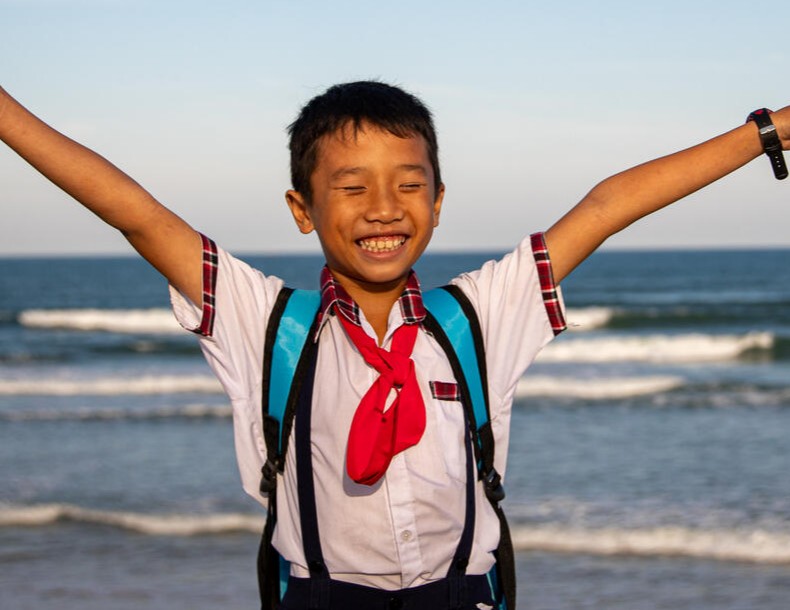
Toàn’s story: education emergency supplies in Viet Nam
Ten‑year‑old Toàn plays at Cát Tiến beach in Viet Nam, a place full of memories for him, his mother Nhất and his older brother. He speaks openly about his dreams, saying: “I would love to become a sailor one day. I love the sea so much.”
But in October, a typhoon destroyed his home and flooded his school, leaving him out of class for two weeks while the family stayed with relatives.
The storms and floods that hit Viet Nam in 2025 caused widespread damage to homes, schools and supplies. Many families found themselves rebuilding not only their houses but also the structure of daily life. With community support, Toàn’s family now has a safer home built to better withstand future climate‑related disasters.
When the new school semester began, UNICEF delivered learning kits to primary school students. Toàn received one during his first week back. The kit, containing a backpack and school supplies, helped him return to routine at a time when his family had lost much of what they owned.
His story illustrates how a simple set of materials can help restore stability for a child affected by climate emergencies. Returning to class, with everything he needed to participate, allowed him to reconnect with his studies after disruption.
Can you help children receive an education?
With support from you, UNICEF can reach children with learning supplies now.

Alessa’s story: Learning amid conflict in Ukraine
After completing her first school year online, Alessa, age seven, is preparing for her first experience of in‑person learning with classmates. Looking around the room, she explains: “I really want to sit at a desk. At home I don’t have one, only my chair. And I also want to talk to my teacher and classmates. At home, it’s just me, my cat, and my fish.”
Years of conflict in Ukraine forced many schools to relocate lessons underground or shift entirely to remote learning. In Kharkiv region, safety considerations shaped every decision about reopening. For many children, long periods without face‑to‑face interaction affected not only their education but also their sense of connection.
UNICEF rehabilitated the school’s underground shelter and classrooms. The renovated spaces include new furniture and child‑friendly learning areas designed to support blended instruction. Younger pupils, including Alessa, were prioritised for in‑person learning so they could reconnect with classmates and rebuild essential skills.
Alessa’s return highlights what it means for a child to step back into a shared learning space after years of displacement and disruption. Sitting at a desk, meeting classmates and participating in lessons represent important changes in her daily life.
Salde’s Story: Returning to learning
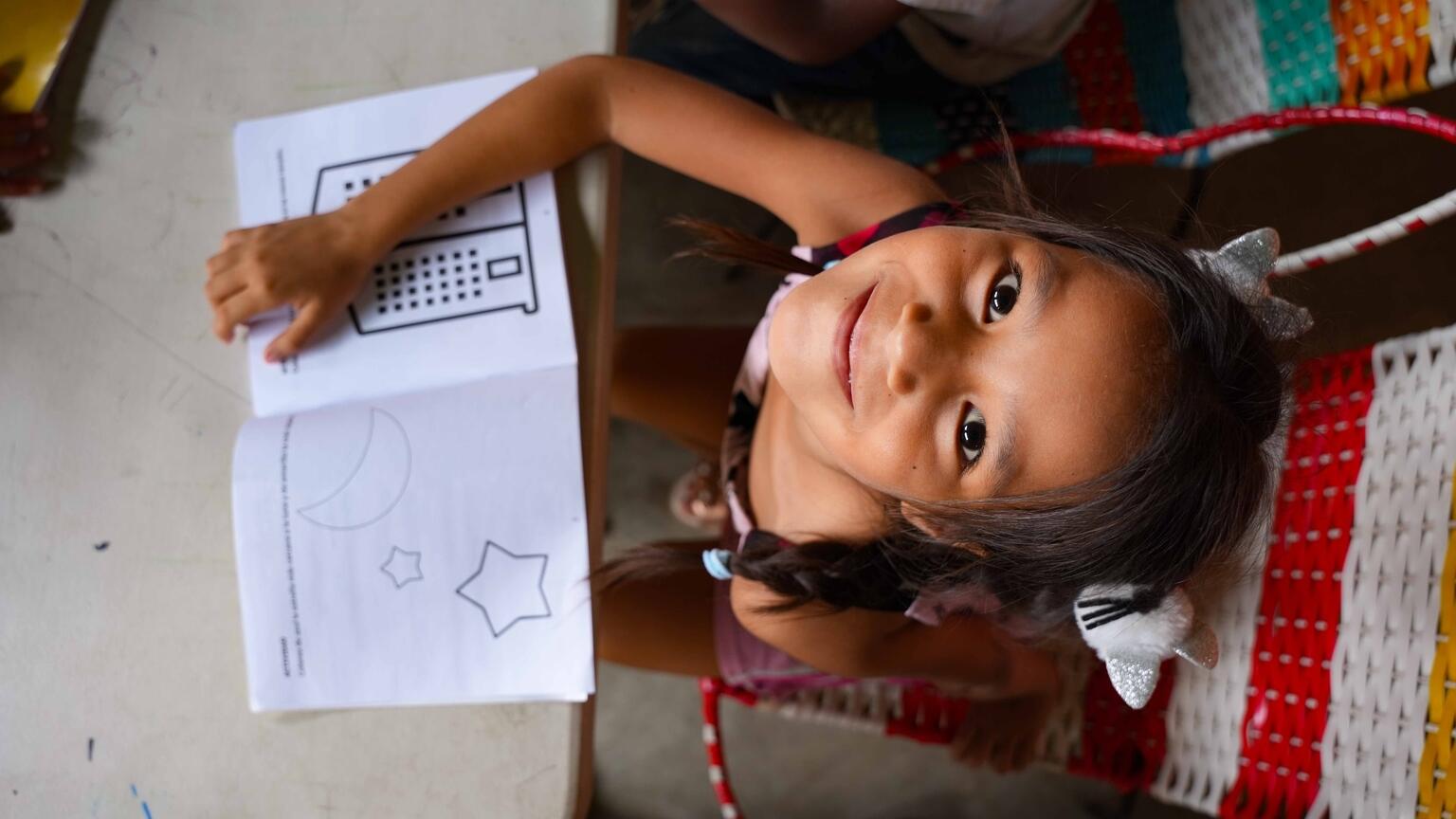
Seven‑year‑old Salde attends “The Magic of Learn,” a temporary learning centre supported by UNICEF in Venezuela. The centre provides lessons in reading, writing, mathematics and socio‑emotional development, offering children a structured environment after long interruptions to their education.
Venezuela’s education system has faced significant strain. An estimated 1.5 million children were out of school by 2024. Many schools could operate only a few days a week due to teacher shortages, and deteriorating infrastructure limited effective learning.
Temporary learning centres help address these gaps by creating stable spaces where children can regain foundational skills and reconnect with structured routines.
For Salde, attending the centre supports his preparation for re‑entering formal schooling. It is part of a broader effort to help children recover learning that has been lost during prolonged instability.
As educational challenges continue, these centres remain an essential part of ensuring that children keep moving forward despite the wider pressures on the school system.