
The situation
Since the escalation of violence in October 2023, 21,510 Palestinian children have been reported killed and 41,283 injured in the Gaza Strip, of which an estimated 11,000 children have serious injuries requiring long-term rehabilitation, with many leading to permanent disabilities. Explosive weapons are the main cause of children being maimed. Despite the ceasefire announced in October 2025, children in the Gaza Strip and across the State of Palestine continue to be subjected to killing and maiming because of the ongoing conflict and violence.
UNICEF has never stopped delivering for children in Gaza. Throughout these devastating years, we have provided vital aid — from water and medical supplies to psychosocial support — and we will continue to do so. But to reach every child in need, we must have full, safe and unimpeded access to our supplies and the families who depend on them.
The Gaza Children Want
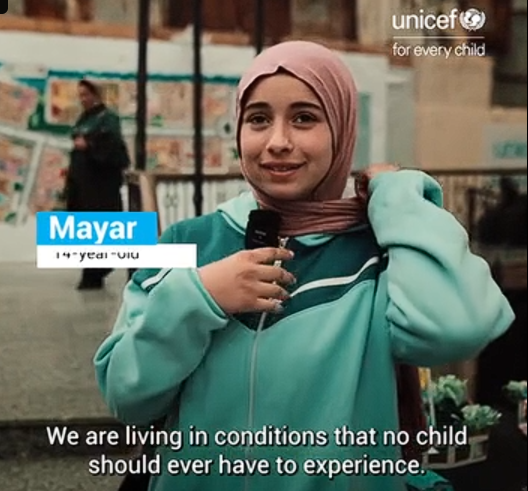
For the past two years, Gaza’s children have been spoken about endlessly. Their deaths and injuries reported. Their suffering described. But what has been less visible is something far simpler and incredibly important: their own voices. That is why UNICEF launched “The Gaza We Want” initiative.
The Gaza We Want captures children’s perspectives on recovery and reconstruction in the Gaza Strip, addressing a critical gap: what children in Gaza want for their own futures. By documenting children’s priorities and views, the initiative helps inform child-centered recovery, reconstruction, and policy planning, while reinforcing the importance of meaningful, ongoing child participation in decisions about Gaza’s future.
Children were invited to express themselves in the forms they prefer and use naturally: drawings of neighborhoods and parks, models made from rubble and recycled materials, poems, short stories and letters. They also participated through group murals, plays, and simple surveys supported by trained facilitators. Through the Gaza We Want initiative, children are telling not only what they lost, but what must come next.
Read the report
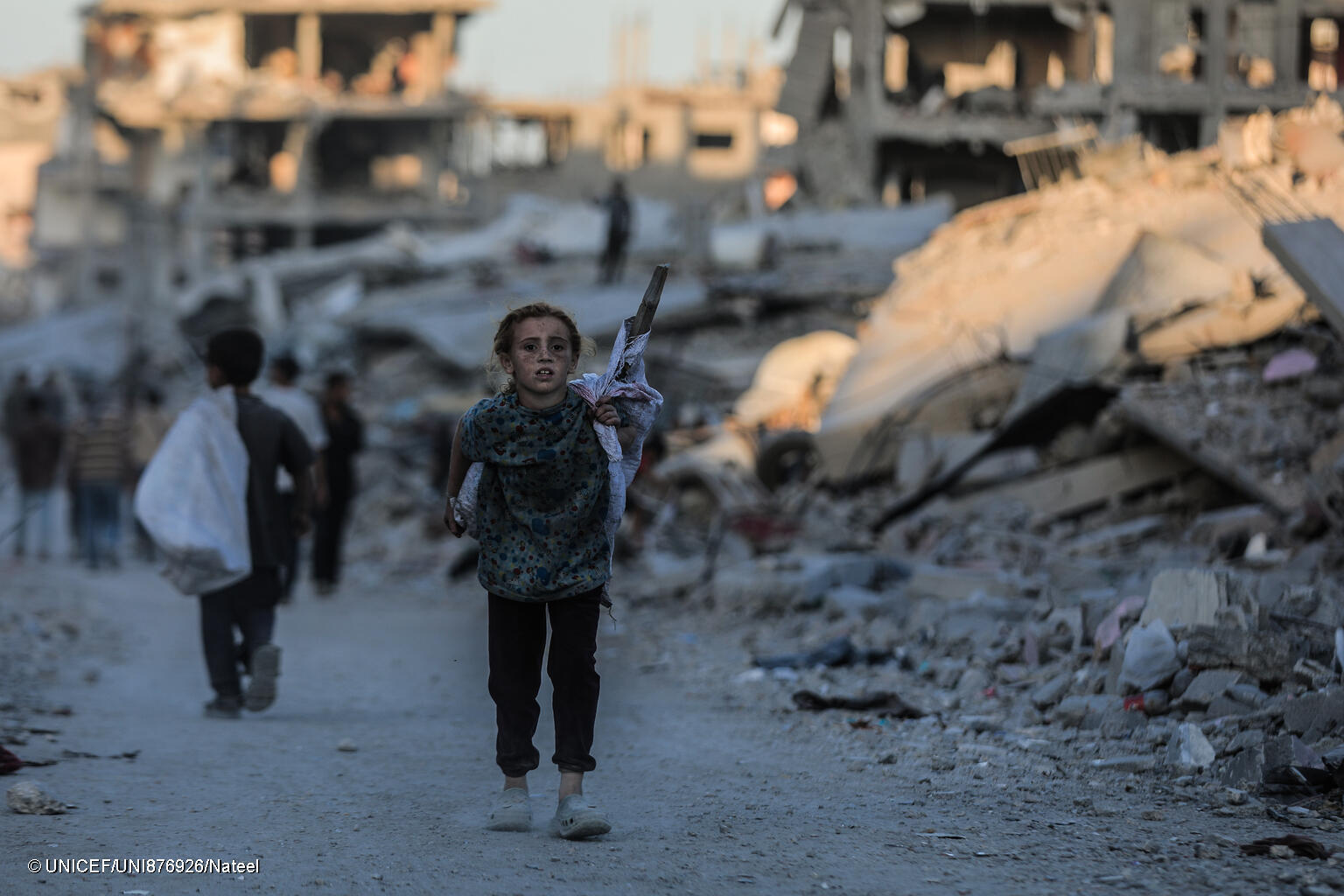
On 10 October 2025, a child walks among thousands of Palestinian families who are moving along the coastal road back to northern Gaza, amid the extreme devastation of infrastructure.
The humanitarian situation in Gaza remains catastrophic
– Mass Displacement: Nearly 1.9 million people (85% of the population) have been displaced, with families sheltering in overcrowded, makeshift facilities lacking reliable access to food, clean water, and medical care.
– Nutrition Crisis: The entire child population under five – over 320,000 children – is at risk of acute malnutrition.
– Healthcare Collapse: Over 80% of health facilities are non-functional, severely limiting access to medical services.
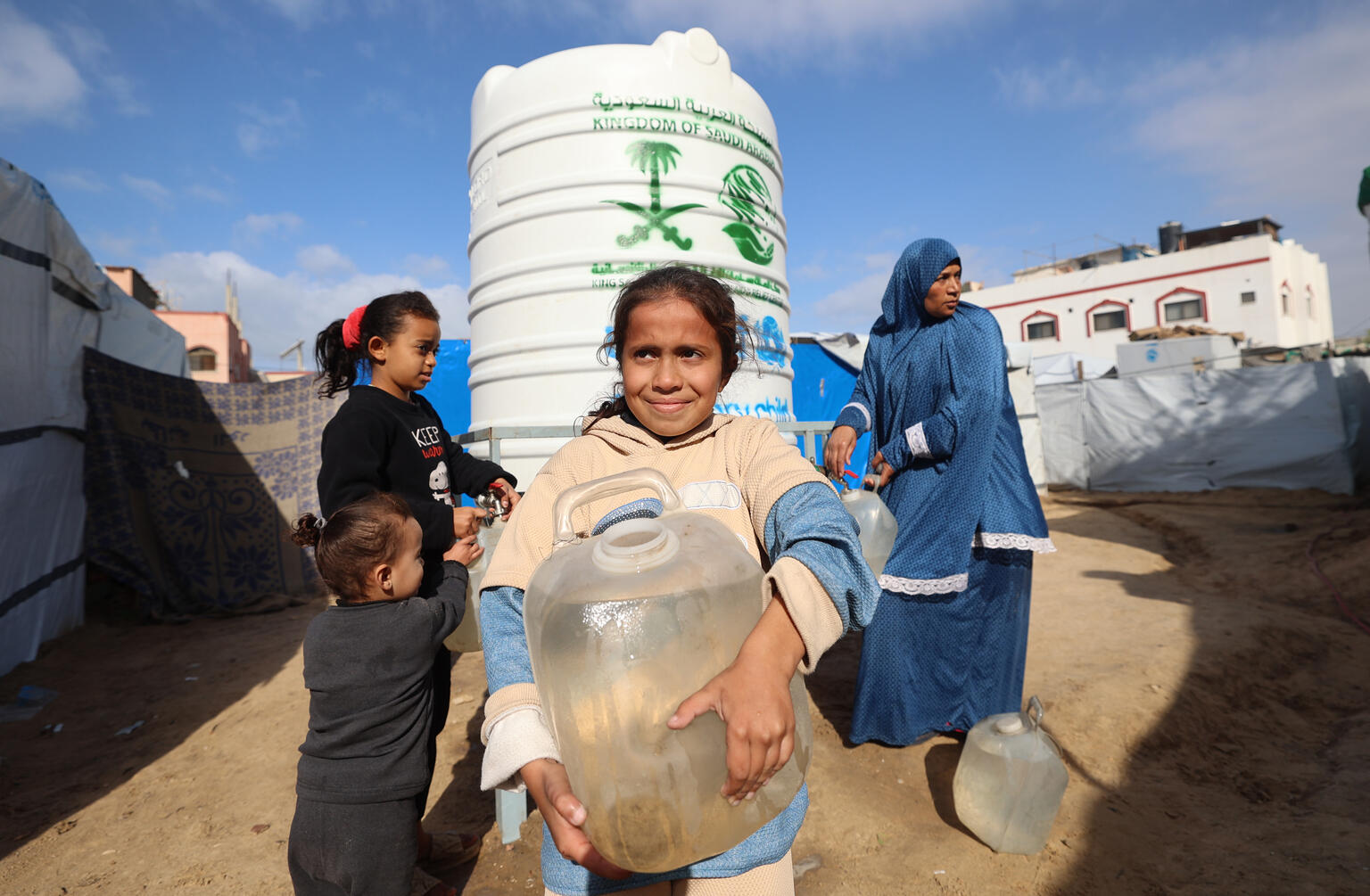
– Water & Sanitation Breakdown: Widespread damage to water and sanitation infrastructure has left much of the population without safe drinking water, increasing the risk of disease outbreaks.
– Education Crisis: 95% of schools have been partially or completely destroyed, depriving hundreds of thousands of children of education and stability.
– Winter Threat: Approaching winter will worsen conditions, especially for children who lack adequate shelter, clothing, and heating.
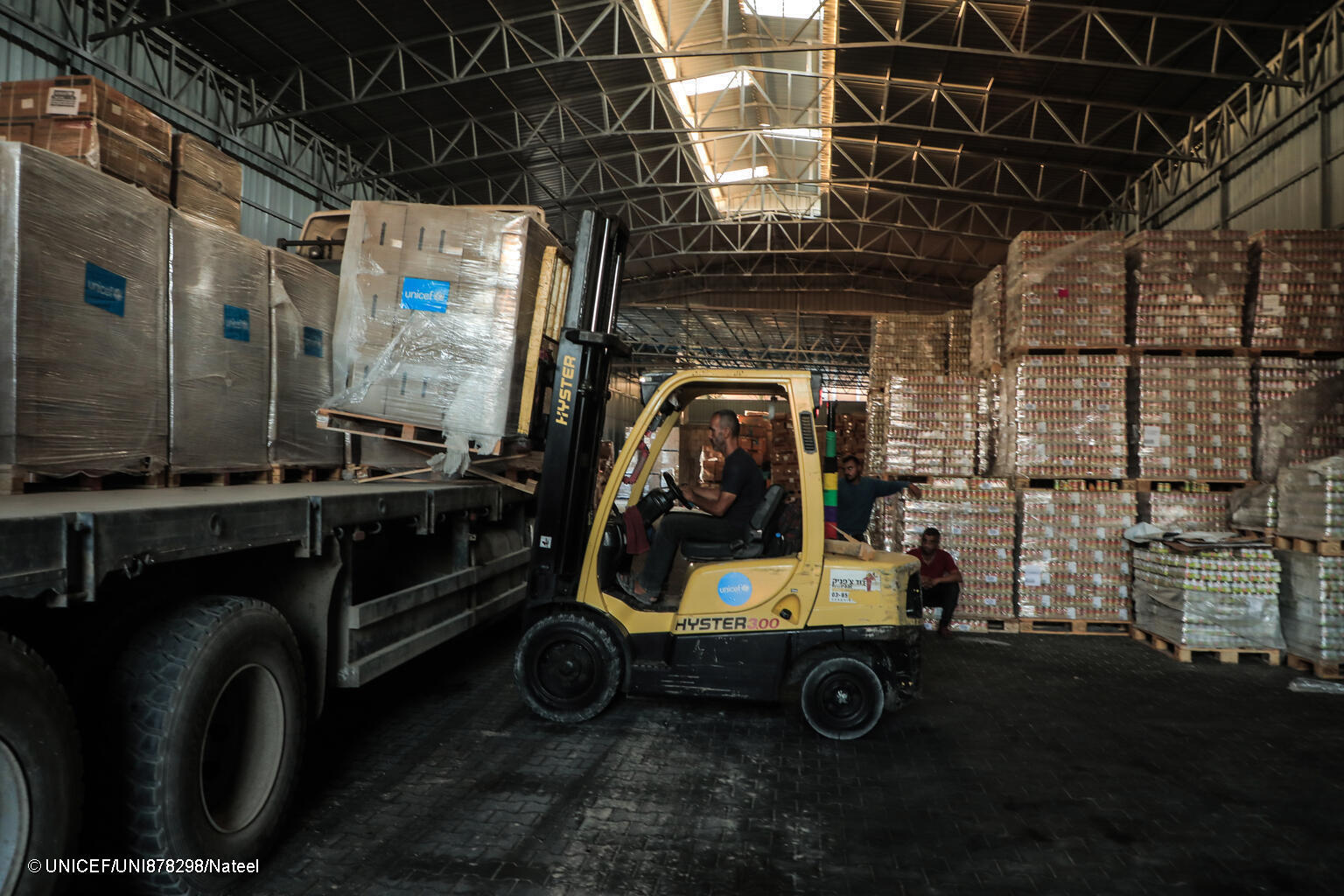
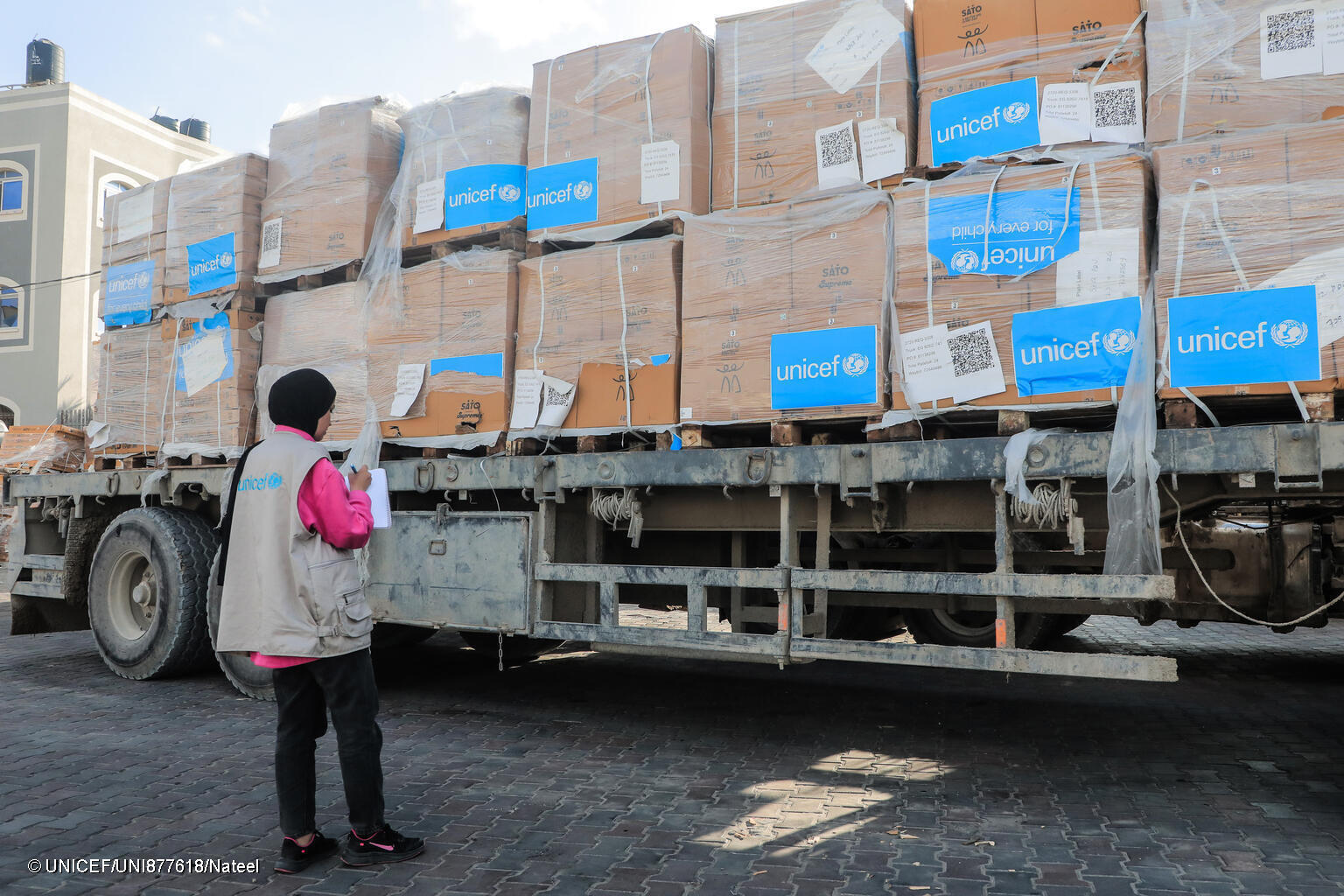
Supplies are off-loaded at a UNICEF warehouse in Deir Al Balah, Central Gaza, State of Palestine, on 13 October 2025, after the arrival of UNICEF trucks carrying life-saving nutrition, shelter and hygiene items.
UNICEF supports a child- and youth-focused recovery in Gaza
In 2024 and 2025, UNICEF provided child protection case management support to 17,698 vulnerable children in the Gaza Strip and continues to prioritise children with conflict-related injuries as one of the most vulnerable and at-risk groups.
We provide injured children and affected family members with specialized MHPSS. We also provide multi-purpose cash assistance to injured children and their families, and cash top-ups to children with disabilities as part of our State of Palestine-wide efforts to address the long-term impact of protracted conflict.
Protecting children is multifaceted in this part of the world, which is why UNICEF prioritises urgent needs in WASH, health, nutrition, education, child protection and social protection while strengthening systems and preparedness.
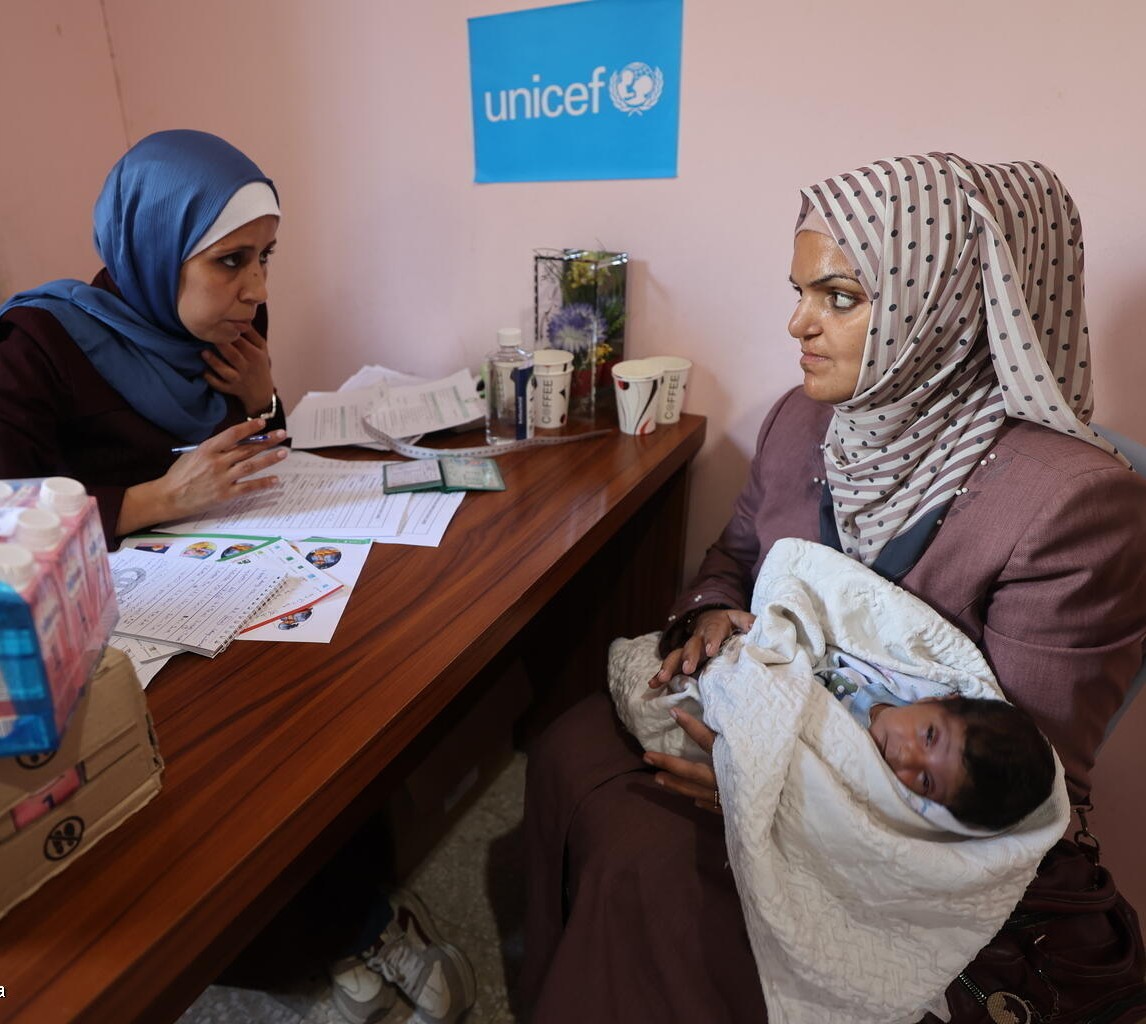
UNICEF’s work in Gaza goes far beyond the delivery of aid parcels
We repair water wells and sewage systems, provide fuel to desalination plants, and deliver safe water via trucks since water networks have been largely destroyed.
Our nutrition programmes include not only therapeutic food but also malnutrition screening, and breastfeeding counselling for mothers.
We provide humanitarian cash transfers to help tackle hunger even when aid access is limited, giving vulnerable families the purchasing power and dignity to buy food and essentials in a highly volatile market.
We have delivered obstetric and trauma kits, installed incubators and ventilators in neonatal intensive care units, and supported maternal and newborn health services through training and supervision.
We lead on the planning and delivery of major routine immunisation campaigns to protect children in Gaza against deadly diseases like polio and diphtheria.
Despite the devastation, we have also established temporary learning centres, offering children access to play, learning, and psychosocial support.
The scale of need is staggering, but no matter the challenges, UNICEF is on the ground in Gaza doing all we can and we never give up.
It is the support of our donors that enables us to continue this vital work under the most difficult circumstances.
Donate by Cheque or Bank Transfer
UNICEF Ireland, 33 Lower Ormond Quay, Dublin 1, D01 R28
For Bank Transfers, download our bank details PDF below for more information. Please add "Gaza" to the payment reference.
Contact Our Teams Directly
Corporate Partnership Team
For businesses looking to support children in Gaza, please contact [email protected] or donate today.
Philanthropy Team
If you or your family office would like to support children in Gaza, please contact Donna Marie O’Donovan, Head of Philanthropy: [email protected] or refer to the donation box below.
Why UNICEF?
UNICEF has been supporting children and families on the ground in the State of Palestine for decades.
The sheer scale of our infrastructure and long-term development work for children means that we are uniquely positioned to respond rapidly and effectively to these crises.
With a vast global procurement and distribution network, including the largest humanitarian warehouse in the world, UNICEF is equipped to respond rapidly with lifesaving supplies and support.
Sustainable interventions are important because crises are not one-time shocks; their impact can last for years. UNICEF’s humanitarian action takes a cross-sectoral approach that includes health, nutrition, water, sanitation and hygiene (WASH), child protection, education, psychosocial support.
Non-political and impartial, we are never neutral when it comes to defending children’s rights and safeguarding their lives and futures.
And we never give up.